Executive Summary: Beyond Raw Throughput to Deterministic Latency
For the past quarter-century, each successive iteration of the IEEE 802.11 wireless standard has prioritized a single headline metric: raw maximum data throughput. From the humble 11 Mbps of 802.11b in 1999 to the gigabit speeds of Wi-Fi 6 (802.11ax), wireless networking has continually striven to catch up with wired Ethernet cables.
However, in modern dense digital environments—where homes host dozens of interconnected smart appliances, enterprises support hundreds of concurrent video conference streams, and spatial computing headsets demand uncompressed 8K streaming—speed alone is no longer sufficient. The primary bottleneck of modern wireless networking is latency instability, packet jitter, and radio frequency interference.
Wi-Fi 7, standardized under the IEEE specification 802.11be Extremely High Throughput (EHT), represents a quantum leap in wireless engineering. While it delivers staggering theoretical speeds of up to 46 Gbps (nearly five times faster than Wi-Fi 6), its true revolutionary breakthrough is deterministic ultra-low latency and Multi-Link Operation (MLO). Wi-Fi 7 is engineered to make wireless connections indistinguishable from physical wired Cat 6e Ethernet cables.
 Figure 1: High-performance tri-band Wi-Fi 7 access point utilizing 2.4 GHz, 5 GHz, and 6 GHz spectrum simultaneously.
1. The Core Technological Pillars of Wi-Fi 7
To achieve its unprecedented throughput and reliability, 802.11be introduces four fundamental physical layer (PHY) and medium access control (MAC) architectural enhancements:
1. Massive 320 MHz Channel Widths
In wireless communications, channel width is directly proportional to data capacity: wider channels can transport more bits simultaneously.
- Wi-Fi 5 was constrained to 80 MHz channels (occasionally 160 MHz in ideal conditions).
- Wi-Fi 6 added support for 160 MHz channels in the 5 GHz band.
- Wi-Fi 7 doubles maximum channel width to 320 MHz within the newly unlocked 6 GHz spectrum. Think of this as expanding a 2-lane highway directly into an 8-lane expressway, instantly doubling single-client throughput.
2. 4096-QAM (4K-QAM) Modulation Density
 Figure 2: 4096-QAM constellation diagram: Packing 12 bits per constellation symbol for 20% higher peak spectral efficiency.
Quadrature Amplitude Modulation (QAM) dictates how many binary bits of digital information are packed into each radio wave symbol by altering amplitude and phase:
- Wi-Fi 6 used 1024-QAM, encoding 10 bits per transmission symbol ($2^{10} = 1024$).
- Wi-Fi 7 elevates modulation to 4096-QAM, packing 12 bits per symbol ($2^{12} = 4096$). This yields a direct 20% increase in peak data transfer rates at close to medium range, allowing devices to transmit significantly more data within the identical spectral window.
3. Multi-Link Operation (MLO): The Definitive Game Changer
In all previous generations of Wi-Fi, a client device (such as a laptop or smartphone) could connect to only one frequency band at a time. If your phone connected to the 5 GHz band, the 2.4 GHz and 6 GHz radios in the router sat completely idle with respect to your device. If interference occurred on the 5 GHz channel, packets were dropped and buffered, causing latency spikes.
Multi-Link Operation (MLO) completely destroys this limitation:
- A Wi-Fi 7 client establishes simultaneous, concurrent connections across multiple frequency bands (e.g., 5 GHz and 6 GHz concurrently).
- MLO Aggregation Mode: High-bandwidth workloads split data packets across both bands simultaneously, combining their throughput into a single massive pipe.
- MLO Redundancy / Low-Latency Mode: Critical low-latency packets (such as an online gaming input or an AR/VR head-tracking vector) are transmitted simultaneously across both bands. Whichever packet arrives at the router first is processed, and the duplicate is discarded. This reduces wireless packet latency down to under 5 milliseconds with near-zero jitter.
4. Multi-RU (Resource Unit) and Preamble Puncturing
In Wi-Fi 6, if even a narrow 20 MHz slice of a 160 MHz channel experienced radio interference from a neighboring router, the entire 160 MHz channel became unavailable, forcing the router to fall back to a slower 80 MHz channel.
- Wi-Fi 7 introduces Preamble Puncturing: The router simply “punctures” and avoids the specific 20 MHz noisy frequency slice while continuing to transmit across the remaining 140 MHz or 300 MHz of clean spectrum. This prevents massive throughput collapses in dense apartment buildings and corporate offices.
Generational Comparison: Wi-Fi 5 vs. Wi-Fi 6 vs. Wi-Fi 7
| Specification Feature | Wi-Fi 5 (802.11ac) | Wi-Fi 6 / 6E (802.11ax) | Wi-Fi 7 (802.11be) |
|---|---|---|---|
| Release Year | 2013 | 2019 / 2021 | 2024 |
| Supported Bands | 5 GHz only (2.4 GHz used 802.11n) | 2.4 GHz, 5 GHz (and 6 GHz for 6E) | 2.4 GHz, 5 GHz, and 6 GHz |
| Max Channel Bandwidth | 80 MHz (Optional 160 MHz) | 160 MHz | 320 MHz |
| Modulation Density | 256-QAM (8 bits/symbol) | 1024-QAM (10 bits/symbol) | 4096-QAM (12 bits/symbol) |
| Max Spatial Streams | 8x8 MU-MIMO | 8x8 MU-MIMO | 16x16 MU-MIMO |
| Max Theoretical Speed | 3.5 Gbps | 9.6 Gbps | 46.1 Gbps |
| Multi-Link Operation | Unsupported | Unsupported | Natively Supported (MLO) |
| Target Latency Range | 30ms – 100ms | 15ms – 30ms | Sub-5ms Deterministic |
Real-World Applications Enabled by Wi-Fi 7
 Figure 3: Next-generation spatial computing: Multi-Link Operation delivering sub-5ms deterministic wireless latency.
The architectural improvements in 802.11be unlock consumer and industrial use cases that were previously impossible over wireless connections:
1. Wireless Spatial Computing and Extended Reality (XR)
High-end virtual and augmented reality headsets (Apple Vision Pro, Meta Quest Pro) require immense data bandwidth to stream uncompressed dual-4K video streams while tracking head movements. If wireless transmission latency exceeds 15ms to 20ms, users experience disorienting motion sickness (vestibular mismatch). Wi-Fi 7’s sub-5ms deterministic MLO latency enables untethered, photorealistic wireless VR streaming from local PCs without heavy display cables.
2. High-Density Enterprise and Campus Networks
In packed university lecture halls, enterprise trading floors, and sports stadiums where thousands of mobile devices compete for spectrum, Wi-Fi 7’s 16x16 MU-MIMO and Multi-RU puncturing prevent channel saturation, ensuring every client receives reliable, high-speed connectivity.
3. Wireless 8K Video Production and Cloud Gaming
Videographers and media production teams can stream and edit raw 8K ProRes video files stored on network NAS arrays over Wi-Fi without frame stuttering. Cloud gaming platforms (GeForce NOW, Xbox Cloud Gaming) operate with the exact responsiveness and zero-jitter consistency of local console hardware.
Hardware Adoption and Migration Considerations
To benefit from Wi-Fi 7, both the access point (router) and the client device (smartphone, laptop, motherboard) must support the 802.11be standard:
- Backward Compatibility: Wi-Fi 7 routers are fully backward compatible; legacy Wi-Fi 5 and Wi-Fi 6 devices will connect normally, but will operate at their legacy speeds and without MLO capabilities.
- Client Ecosystem Rollout: Flagship smartphones equipped with Qualcomm Snapdragon 8 Gen 3/Elite, Apple silicon, and Intel Core Ultra laptops shipping in 2024/2025 now feature integrated Wi-Fi 7 silicon modems.
- Wired Backhaul Mandate: If your home or enterprise router supports 46 Gbps wireless speeds, your internet service and LAN backhaul must not be throttled by a 1 Gbps Ethernet cable. Upgrading core switches to 10GbE (10 Gigabit Ethernet) is essential to unlock the full potential of Wi-Fi 7 hardware.
Conclusion: The Wireless Era Achieves Parity with Fiber
For decades, the standard advice given to competitive gamers, enterprise system administrators, and digital audio/video professionals was unequivocal: “If you care about performance, use an Ethernet cable.”
Wi-Fi 7 marks the historical moment where that dogma is finally dismantled. By uniting 320 MHz ultra-wide channels, 4096-QAM density, and multi-band Multi-Link Operation, Wi-Fi 7 delivers the elusive trifecta of wireless engineering: massive multi-gigabit throughput, bulletproof interference resilience, and deterministic microsecond latency. The untethered future has officially arrived.
Industrial and Enterprise Deployments of Wi-Fi 7
While consumer households appreciate Wi-Fi 7 for ultra-smooth 8K video streaming and wireless virtual reality (VR), the most transformative impact of the standard is unfolding across high-density enterprise environments, corporate campuses, and automated smart factories.
Deterministic Low Latency for Factory Automation
In automated industrial robotics, automated guided vehicles (AGVs) transporting raw inventory across factory floors require deterministic network latencies below 5 milliseconds. Previously, wireless packet jitter forced industrial operators to rely on expensive physical Ethernet umbilical cords or proprietary industrial radios.
With Wi-Fi 7’s Multi-Link Operation (MLO) and Restricted Target Wake Time (rTWT), enterprise access points allocate dedicated, interference-free wireless time slots specifically reserved for robotic telemetry. If an automated vehicle encounters sudden RF interference on the 5GHz frequency band, MLO instantaneously shifts safety-critical navigational telemetry to the pristine 6GHz spectrum with zero packet loss or connection renegotiation delay. This reliability enables factories to untether industrial equipment, enabling unprecedented manufacturing reconfiguration flexibility.
Enhanced Wi-Fi Security: Mandatory WPA3 and Cryptographic Hardening
Operating across dense multi-gigabit spectrums necessitates ironclad wireless security standards. Wi-Fi 7 mandates WPA3-Enterprise and WPA3-Personal protocols across all 6GHz channels, completely deprecating vulnerable legacy WPA2 fallbacks.
By implementing Simultaneous Authentication of Equals (SAE) with forward secrecy and enforcing 192-bit cryptographic suites along with Protected Management Frames (PMF), Wi-Fi 7 networks protect users against offline dictionary attacks, wireless eavesdropping, and de-authentication spoofing attacks in public airports and enterprise office buildings.


How Smartphones Have Evolved Over the Years
A comprehensive technological history tracing the smartphone evolution from early cellular communicators to multi-camera silicon powerhouses and on-device neural engines.

OLED vs AMOLED vs LCD: Understanding Display Technologies
A comprehensive optical engineering comparison of LCD, OLED, and AMOLED display panels, evaluating backlights, organic semiconductors, contrast ratios, burn-in, and power efficiency.
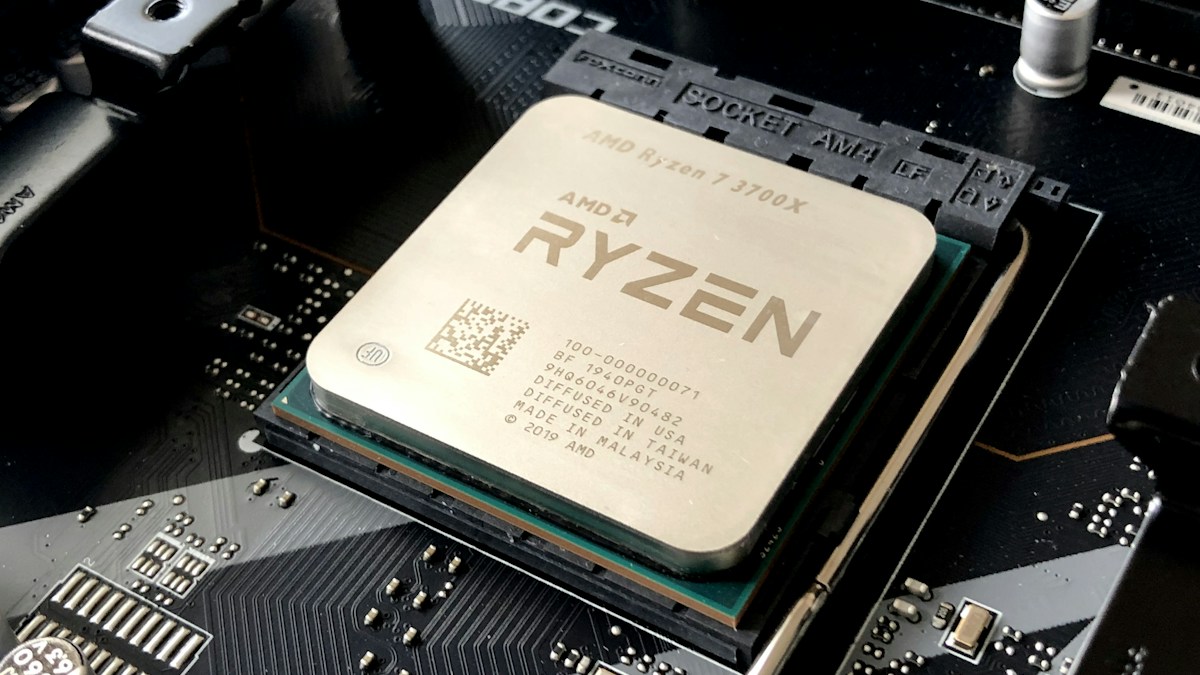
Understanding Processor Technology: CPU vs GPU
An architectural deep dive into semiconductor processor technology, contrasting CPU low-latency sequential computing with GPU massively parallel matrix execution.