
Executive Summary: The Utility Model of Computation
Before the advent of cloud computing, deploying a software application was an expensive, slow, and operationally hazardous undertaking. An organization had to forecast computational capacity months or years in advance, purchase physical rack-mounted servers, lease space in raised-floor colocation data centers, run power and cooling HVAC systems, negotiate transit contracts with multiple telecommunication carriers, and maintain dedicated hardware engineering teams to replace failed disk drives and memory modules.
Cloud Computing dismantled this capital-intensive model, replacing it with an elastic utility model. Just as modern factories no longer construct private hydroelectric dams or coal-fired power plants to generate electricity—relying instead on plugging into the municipal electrical grid and paying for kilowatt-hours consumed—enterprises now consume computing power, storage, and networking as an on-demand utility from hyperscale cloud providers.
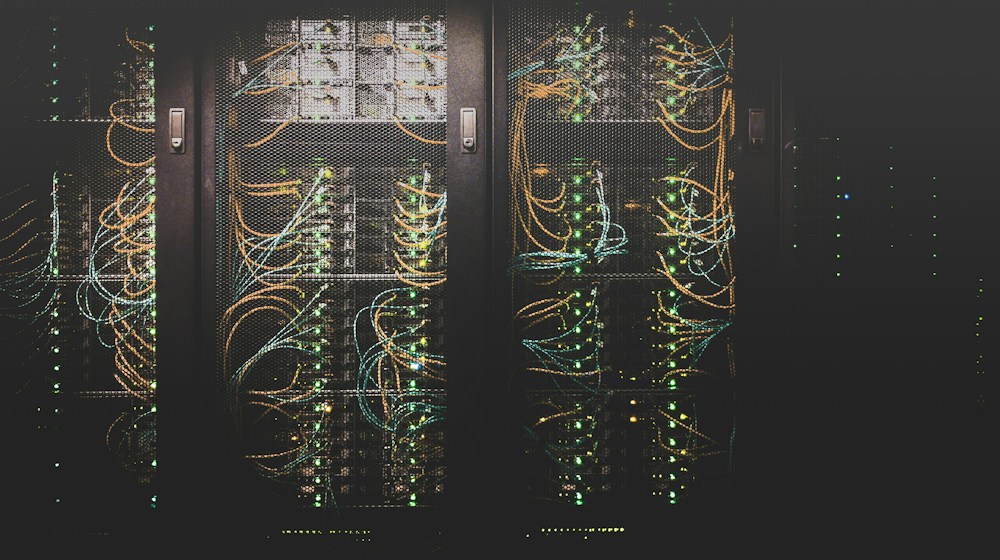 Figure 1: Hyperscale data center physical architecture powering elastic cloud resource pools.
The Essential Characteristics of Cloud Computing (NIST SP 800-145)
The National Institute of Standards and Technology formally defines cloud computing across five fundamental characteristics:
- On-Demand Self-Service: A consumer can unilaterally provision computational resources (such as server compute time, storage volumes, and network firewalls) automatically via web portals or APIs without requiring human interaction with the service provider.
- Broad Network Access: Capabilities are available over standard IP networks and accessed through standardized mechanisms that promote use by heterogeneous client platforms (laptops, mobile devices, IoT endpoints).
- Resource Pooling: The provider’s computing resources are pooled in multi-tenant models to serve multiple consumers, dynamically assigning and reassigning physical and virtual resources according to demand.
- Rapid Elasticity: Resources can be elastically provisioned and released—often automatically—to scale rapidly outward and inward in response to real-time traffic demand spikes.
- Measured Service: Resource usage is monitored, controlled, and reported transparently, providing automated billing metrics based on actual utilization (CPU hours, gigabytes stored, bandwidth egressed).
The Cloud Service Hierarchy: IaaS vs. PaaS vs. SaaS
 Figure 2: The Shared Responsibility Model: Delineating customer versus cloud provider obligations.
Cloud services are categorized into three primary architectural tiers, each representing a different division of management responsibility:
+-------------------------------------------------------------------------+
|                  THE CLOUD SERVICE MODEL HIERARCHY                      |
+---------------------+---------------------+-----------------------------+
| IaaS (Infrastructure| PaaS (Platform as   | SaaS (Software as           |
|      as a Service)  |      a Service)     |      a Service)             |
+---------------------+---------------------+-----------------------------+
| You Manage:         | You Manage:         | You Manage:                 |
| - Applications      | - Applications      | - User Access & Config Only |
| - Data & Runtime    | - Data              |                             |
| - OS & Middleware   |                     | Provider Manages:           |
|                     | Provider Manages:   | - EVERYTHING ELSE           |
| Provider Manages:   | - OS, Runtime       | (App, OS, DB, Servers, Net) |
| - Virtualization    | - Virtualization    |                             |
| - Hardware, Servers | - Hardware, Servers | Examples:                   |
| - Networking, Power | - Networking, Power | - Google Workspace, Slack   |
|                     |                     | - Microsoft 365, Salesforce |
| Examples:           | Examples:           |                             |
| - AWS EC2, Azure VMs| - AWS Elastic Beanstalk,                        |
| - GCP Compute Engine|   Google Cloud Run, Heroku                      |
+---------------------+---------------------+-----------------------------+
1. Infrastructure as a Service (IaaS)
IaaS provides foundational computing building blocks: virtualized machines, raw block storage, and software-defined networks. The cloud provider owns and manages the physical hardware, facilities, and hypervisor layer. The customer installs, configures, and patches their own operating system (Linux, Windows), runtime environments, databases, and application code.
- Best For: Maximum architectural control, legacy application migrations, custom kernel configurations.
2. Platform as a Service (PaaS)
PaaS elevates abstraction by eliminating operating system management. The provider provisions the hardware, installs the OS, configures the database, and manages container runtimes. The developer simply uploads their application source code or container image. The platform automatically handles scaling, load balancing, health checks, and OS security patching.
- Best For: Agile software development teams focusing purely on business logic without dedicated infrastructure operations teams.
3. Software as a Service (SaaS)
SaaS delivers complete, end-user applications hosted and managed entirely by a third-party vendor. Consumers access the software through web browsers or thin mobile clients with zero awareness of the underlying servers, database clusters, or networking.
- Best For: Standardized business productivity, customer relationship management (CRM), and enterprise communication.
Deployment Models: Public, Private, and Hybrid Cloud
Organizations deploy cloud resources across three primary operational topologies:
| Deployment Model | Architectural Mechanics | Key Benefits | Trade-offs & Challenges |
|---|---|---|---|
| Public Cloud | Multi-tenant hyperscale data centers owned by commercial providers (AWS, Azure, GCP) | Infinite elasticity, zero CapEx, global geographic reach | Data sovereignty concerns, network egress fees |
| Private Cloud | Dedicated single-tenant infrastructure operated exclusively for one enterprise | Total security control, predictable bare-metal performance | High capital expenditure (CapEx), ongoing hardware maintenance |
| Hybrid Cloud | Tightly integrated federation connecting private on-premise infrastructure with public clouds | Data sovereignty compliance, “cloud bursting” elasticity | High architectural complexity, hybrid identity sync |
The Physical Reality: Regions, Availability Zones, and Global Backbones
 Figure 3: Global optical backbone networks connecting multi-region availability zones with sub-millisecond latency.
Although colloquially referred to as “the cloud,” the architecture is deeply grounded in physical terrestrial and undersea reality:
Regions
A Region is a distinct geographical location on the globe (e.g., us-east-1 in North Virginia, eu-central-1 in Frankfurt, ap-south-1 in Mumbai). Each region is physically isolated from other regions to ensure fault tolerance against natural disasters, geopolitical disruptions, or major power grid collapses.
Availability Zones (AZs)
Within every region, cloud providers construct multiple (typically three or more) Availability Zones. An AZ is one or more discrete physical data centers equipped with independent, redundant power supplies, backup diesel generators, chilled-water cooling systems, and physical security perimeters.
- Crucially, AZs within a single region are interconnected via dedicated, low-latency, private optical fiber rings with round-trip transit times under 2 milliseconds.
- This design enables engineers to build fault-tolerant, active-active distributed architectures: if a backhoe severs a physical fiber cable or a municipal substation fails in AZ-a, traffic fails over instantaneously to AZ-b and AZ-c without user disruption.
Cloud Economics: CapEx vs. OpEx and FinOps
The transition to cloud computing fundamentally alters enterprise corporate finance:
Capital Expenditure (CapEx) to Operational Expenditure (OpEx)
- Traditional On-Premise (CapEx): Requires upfront multi-million dollar capital investments depreciated over 3 to 5 years. If traffic exceeds forecasted capacity, servers crash; if traffic falls short, expensive silicon sits idle, wasting capital.
- Cloud Computing (OpEx): Converts fixed capital costs into variable operating costs. An enterprise pays only for active compute instances measured in seconds. If a marketing campaign triggers a 10x traffic spike, infrastructure scales out automatically; once traffic subsides, instances terminate and billing halts.
The Rise of FinOps (Cloud Financial Operations)
Because cloud resources are trivially easy for developers to spin up with a single API call, unmonitored cloud spending can spiral out of control. FinOps is the cultural and operational discipline that brings financial accountability to cloud engineering:
- Implementing mandatory resource tagging (Cost Center, Owner, Environment).
- Leveraging Reserved Instances (RIs) and Savings Plans to secure up to 72% discounts in exchange for committed capacity.
- Automatically purging orphaned EBS storage volumes and idle staging environments on nights and weekends.
Conclusion: The Foundation of Modern Software
Cloud computing is not merely an alternative way to host servers; it is the foundational substrate of the modern digital economy. By democratizing access to supercomputing infrastructure, global content delivery networks, enterprise database engines, and specialized AI accelerator clusters, cloud computing has leveled the competitive playing field. Today, an ambitious two-person startup can leverage the identical global infrastructure, security perimeters, and computational power as the world’s largest multinational conglomerates.
The Evolution of Cloud Deployment Models and Edge Synergy
While public cloud infrastructure provides unmatched global scale, modern organizational requirements frequently necessitate specialized deployment topologies. Understanding these structural models is vital for designing balanced, compliant enterprise IT estates.
Public, Private, Hybrid, and Community Cloud Models
Enterprises select from four fundamental deployment paradigms based on regulatory constraints, latency thresholds, and capital expenditure preferences:
| Cloud Model | Core Architecture | Typical Use Case | Trade-Offs |
|---|---|---|---|
| Public Cloud | Multi-tenant shared infrastructure managed by hyperscalers (AWS, Azure, GCP). | Web applications, big data analytics, variable workloads. | Low initial cost; ongoing operational expenses and potential noisy neighbor variance. |
| Private Cloud | Dedicated hardware isolated for a single enterprise, hosted on-premises or co-located. | National defense, sensitive banking core ledgers, sovereign health records. | Maximum security control; high capital equipment expenditure and hardware maintenance overhead. |
| Hybrid Cloud | Interconnected public and private environments linked via secure high-speed interconnects. | Steady-state internal databases paired with public cloud burst compute. | Architectural flexibility; increased configuration complexity and identity management overhead. |
| Community Cloud | Shared infrastructure customized for organizations with common compliance goals. | Municipal government agencies, research university consortiums. | Shared infrastructure costs; collaborative governance dependencies. |
+--------------------------------------------------------------+
|            The Modern Hybrid Cloud Topology                  |
+--------------------------------------------------------------+
| [Private Data Center]                [Public Cloud Region]   |
| Dedicated HSM / Core DB               Scalable Web Frontends |
|           |                                    |             |
|           +<==== High-Speed Direct Connect ====>+             |
|                  (Encrypted IPsec / MACsec)                  |
+--------------------------------------------------------------+
The Cloud-to-Edge Continuity Spectrum
Cloud computing no longer terminates inside remote hyperscale data centers. The proliferation of connected edge devices, smart factories, and autonomous transportation requires compute power closer to data origination points. Through technologies such as AWS Outposts, Azure Stack, and Google Anthos, cloud service providers extend identical APIs, monitoring interfaces, and container orchestrators into enterprise server closets and localized micro-data centers, creating a seamless continuum between centralized core cloud facilities and localized edge gateways.

AWS vs Microsoft Azure vs Google Cloud: Understanding the Differences
A comprehensive comparative analysis of the Big Three hyperscale cloud providers, evaluating compute services, storage performance, AI ecosystems, pricing models, and enterprise fit.

What Is Serverless Computing and How Does It Work?
A deep dive into serverless architecture, event-driven execution models, Function-as-a-Service (FaaS), cold start optimization, and the economics of paying zero for idle infrastructure.

Cloud Storage vs Local Storage: Which Is Better?
An architectural and economic comparison of cloud object storage versus local on-premise NVMe/SAN storage, evaluating latency, throughput, durability, security, and TCO.