Executive Summary: Beyond the Boundaries of Classical Physics
For nearly a century, every computer on Earth—from vintage room-sized vacuum tube mainframes to the latest smartphone in your pocket—has operated on the identical foundational principle: Classical Binary Physics.
At the physical level, classical computers represent information using microscopic silicon transistors that act as binary electronic switches:
- If electricity flows through the gate, the switch is ON: a binary 1.
- If electricity is blocked, the switch is OFF: a binary 0.
Every photograph, algorithm, video game, operating system, and foundation AI model is ultimately nothing more than a staggering sequence of billions of these binary ones and zeros.
Yet nature at the fundamental atomic and subatomic level does not behave as simple binary switches. Nature behaves according to the bizarre, counter-intuitive laws of Quantum Mechanics.
Quantum Computing is an entirely new paradigm of computation that harnesses these quantum phenomena—specifically Superposition, Entanglement, and Quantum Interference—to process information in ways that are physically impossible on even the most powerful classical supercomputers.
 Figure 1: The Bloch Sphere: Geometric representation of a qubit occupying superpositions of state 0 and state 1.
1. Classical Bits vs. Quantum Qubits
The foundational atomic unit of quantum information is the Qubit (Quantum Bit).
The Classical Coin vs. The Spinning Sphere
To understand a qubit, imagine a coin resting flat on a table:
- It can be Heads (1) or Tails (0). That is a classical bit.
- Now, spin that coin rapidly on the tabletop. While it is spinning, is it Heads or Tails? It is a continuous, dynamic mixture of both possibilities simultaneously. That is Superposition.
Mathematically, a classical bit can only be $0$ or $1$. A qubit, however, exists as a linear combination of both basis states:
$$|\psi\rangle = \alpha |0\rangle + \beta |1\rangle$$
Where $\alpha$ and $\beta$ are complex probability amplitudes such that:
$$|\alpha|^2 + |\beta|^2 = 1$$
When a qubit is measured by an observer, the fragile superposition collapses instantaneously into a deterministic classical state: measuring $0$ with probability $|\alpha|^2$ and measuring $1$ with probability $|\beta|^2$.
2. The Twin Superpowers: Superposition and Entanglement
Why does superposition matter computationally? The secret is Exponential Dimensional Scaling.
The Power of 2 to the Power of N ($2^N$)
Consider a 3-bit classical register. It can represent any one of 8 possible states at a time:
000, 001, 010, 011, 100, 101, 110, or 111. To check all 8 combinations, a classical computer must evaluate them sequentially, one after another.
A 3-qubit quantum register in superposition, however, represents all 8 states simultaneously:
+--------------------------------------------------------------+
|             THE EXPONENTIAL SCALING OF QUBITS                |
+--------------------------------------------------------------+
| 3 Qubits    ->   2^3   = 8 simultaneous states               |
| 10 Qubits   ->   2^10  = 1,024 simultaneous states           |
| 50 Qubits   ->   2^50  = ~1.125 quadrillion states           |
| 300 Qubits  ->   2^300 = More simultaneous numbers than the  |
|                  total estimated atoms in the observable     |
|                  universe (~10^80)!                          |
+--------------------------------------------------------------+
Quantum Entanglement: “Spooky Action at a Distance”
Albert Einstein famously derided entanglement as “spooky action at a distance” (spukhafte Fernwirkung), yet it is a proven physical reality. When two or more qubits become entangled, their physical quantum states become fundamentally intertwined:
- The state of Qubit A cannot be described independently of the state of Qubit B, regardless of whether they are separated by 2 millimeters on a silicon chip or 2 light-years across the cosmos.
- If you measure Qubit A and observe it collapse to State 0, Qubit B collapses instantaneously to its correlated state. Entanglement allows a quantum processor to perform coordinated global calculations across thousands of entangled nodes simultaneously.
Quantum Interference: Amplifying the Right Answer
A quantum algorithm is not simply “trying every answer at once.” If you measured a pure superposition randomly, you would receive useless noise.
- Quantum algorithms use Quantum Interference: manipulating probability amplitudes such that wave peaks representing incorrect answers cancel each other out (destructive interference), while the wave peak representing the single correct solution is amplified (constructive interference) before measurement.
3. Physical Quantum Hardware: Chilling Down to Millikelvin
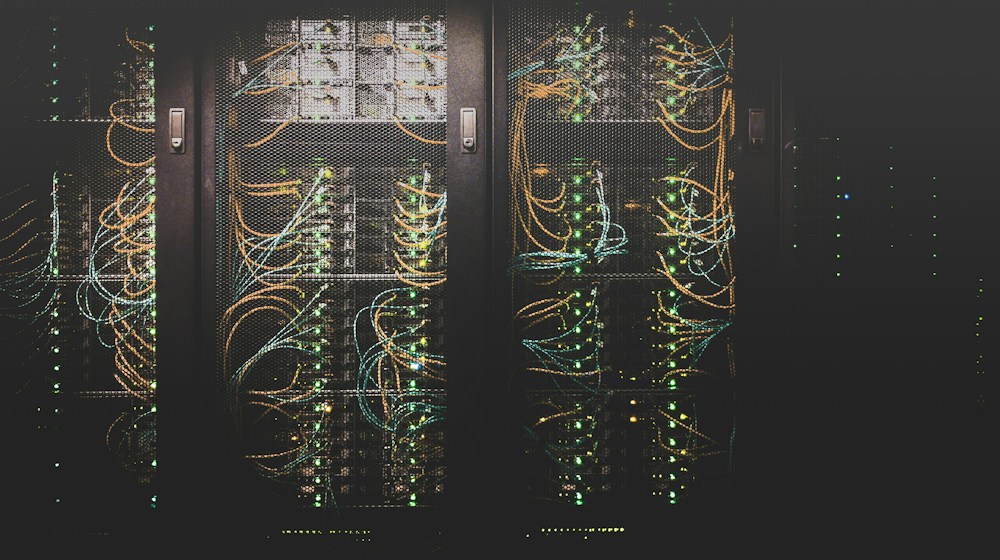 Figure 2: Dilution refrigerator cryogenics chilling superconducting qubits down to 15 millikelvin (-273.13°C).
How do you physically build a qubit? Qubits are extraordinarily fragile physical entities susceptible to Quantum Decoherence: any stray thermal vibration, electromagnetic noise, or cosmic ray will cause the quantum superposition to collapse prematurely into random noise.
The Leading Physical Architectures:
- Superconducting Transmon Qubits (IBM, Google): Microscopic electrical circuits fabricated from niobium or aluminum containing a Josephson Junction. When chilled to near absolute zero, electrical resistance drops to zero, allowing macroscopic electrical currents to oscillate as quantum energy levels.
- Cryogenic Requirement: Superconducting chips must be housed inside massive gold-plated Dilution Refrigerators cooled by liquid helium isotopes down to 15 millikelvin (-273.13°C)—colder than the vacuum of deep interstellar space!
- Trapped Ion Qubits (IonQ, Quantinuum): Suspending individual ionized ytterbium or barium atoms in vacuum chambers using radiofrequency electromagnetic fields, manipulating their quantum spin states via finely tuned ultraviolet laser pulses.
- Neutral Atom Arrays (QuEra): Manipulating hundreds of neutral rubidium atoms suspended in optical tweezers (focused laser beam arrays) to simulate quantum physics.
4. Real-World Applications: What Will Quantum Computers Actually Do?
Quantum computers will never replace your home laptop or smartphone; they are fundamentally terrible at running web browsers, word processors, or operating system kernels. They are specialized mathematical machines engineered to conquer specific problems of catastrophic combinatorial complexity:
| Domain | Problem Solved | Real-World Impact |
|---|---|---|
| Molecular Simulation & Chemistry | Simulating the exact quantum electron orbitals of complex molecules | Room-temperature superconductors, curing Alzheimer’s, designing 10x denser EV batteries |
| The Haber-Bosch Catalyst | Simulating nitrogenase enzymes used by bacteria to fix nitrogen | Slashing the ~2% of global fossil fuel energy currently consumed making agricultural fertilizer |
| Combinatorial Logistics | The Traveling Salesperson problem across millions of global routing variables | Optimizing global airline fleets, maritime shipping lanes, and electrical power grid distribution |
| Quantitative Finance | Pricing multi-asset exotic derivative portfolios and systemic liquidity risk | Ultra-accurate Monte Carlo simulations executing in seconds rather than days |
5. The Cybersecurity Threat: Breaking Modern Encryption
 Figure 3: Post-Quantum Cryptography (PQC): Lattice-based mathematics replacing vulnerable RSA and ECC encryption.
The most urgent geopolitical dimension of quantum computing is its impact on digital cryptography:
Shor’s Algorithm and the Death of RSA
Virtually all global secure communication today (HTTPS, banking portals, VPNs, military defense networks) relies on Asymmetric Public-Key Cryptography (RSA and Elliptic Curve Cryptography / ECC):
- RSA security relies on the classical mathematical difficulty of factoring massive prime numbers (e.g., factoring a 2048-bit integer into two prime factors). For the fastest classical supercomputer, factoring an RSA-2048 key would take billions of years.
- In 1994, mathematician Peter Shor proved that a sufficiently large, fault-tolerant quantum computer running Shor’s Algorithm can factor massive prime numbers in hours.
“Harvest Now, Decrypt Later” (HNDL)
Nation-state adversaries are currently intercepting and storing vast petabytes of encrypted government, corporate, and military communications over fiber optic cables today. Even though they cannot read the encrypted data now, they will decrypt it retroactively once a cryptanalytically relevant quantum computer (CRQC) comes online in the 2030s.
The Solution: Post-Quantum Cryptography (PQC)
In response, NIST recently standardized Post-Quantum Cryptography (PQC) algorithms (such as ML-KEM / Kyber and ML-DSA / Dilithium). These algorithms rely on Lattice-Based Mathematics (Learning With Errors / LWE)—complex high-dimensional geometric problems that are mathematically intractable for both classical and quantum computers.
Conclusion: The Horizon of Fault-Tolerant Quantum Advantage
We are currently in the NISQ (Noisy Intermediate-Scale Quantum) era: machines possess hundreds of physical qubits, but are limited by noise and gate error rates.
The grand engineering milestone of this decade is Quantum Error Correction (QEC): coupling thousands of noisy physical qubits together using surface codes to create a single pristine, fault-tolerant Logical Qubit. When fault-tolerant quantum machines scale to thousands of logical qubits in the 2030s, humanity will unlock the ability to simulate nature at its most fundamental atomic level, ushering in an unprecedented scientific renaissance in materials, medicine, and human understanding.
The Cryptographic Threat: Post-Quantum Cryptography and NIST Standards
The advent of error-corrected quantum computers poses an existential threat to modern public-key cryptography. Peter Shor’s 1994 quantum algorithm mathematically demonstrated that a sufficiently powerful quantum computer can factor large prime numbers and solve discrete logarithms in polynomial time, rendering RSA and Elliptic Curve Cryptography (ECC) obsolete.
In response, the National Institute of Standards and Technology (NIST) finalized its primary Post-Quantum Cryptography (PQC) standards based on lattice mathematics that resist both classical and quantum attacks:
- ML-KEM (Module-Lattice-Based Key-Encapsulation Mechanism): Standardized for secure key establishment across TLS web connections.
- ML-DSA (Module-Lattice-Based Digital Signature Algorithm): Standardized for general-purpose digital signatures, software signing, and PKI certificates.
- SLH-DSA (Stateless Hash-Based Digital Signature Algorithm): A resilient hash-based fallback standard providing long-term signature security without relying on structured lattices.
Enterprises and government institutions are actively implementing “crypto-agility” programs—auditing software dependencies and deploying hybrid classical/post-quantum cipher suites across internet communications before quantum decryption capabilities mature.

How Blockchain Technology Actually Works
A comprehensive cryptographic breakdown of blockchain distributed ledgers, Byzantine Fault Tolerance, Proof of Work vs Proof of Stake, and smart contract state machines.
Understanding the Internet of Things (IoT)
A comprehensive investigation into IoT architectures, MQTT protocol messaging, sensor edge telemetry, smart industrial grids, and embedded device security.

What Is Edge Computing and Why Is It Important?
A comprehensive architectural guide to edge computing, analyzing the speed-of-light latency constraints of cloud data centers, edge AI inference, and autonomous systems.