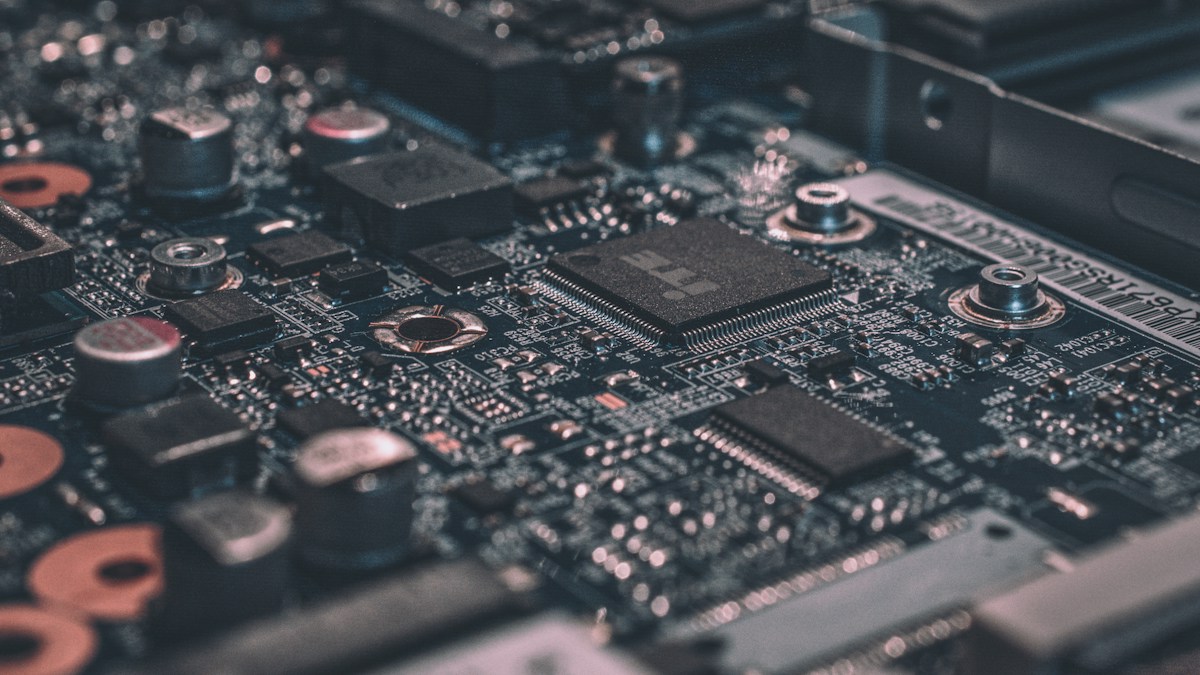
Executive Summary: Bridging the Physical and Digital Worlds
For the first six decades of computing, the digital world and the physical world existed largely in isolation. Computers processed data that was manually typed into keyboards, scanned on flatbeds, or uploaded via magnetic media. Computers were blind, deaf, and disconnected from the tangible reality around them: they had no direct perception of ambient room temperature, industrial pipeline pressure, soil moisture levels, or vehicular velocity.
The Internet of Things (IoT) represents the profound technological convergence where the physical environment is saturated with sensing, computational, and networking capabilities.
Today, tens of billions of everyday physical objects—refrigerators, cardiac pacemakers, industrial turbines, traffic signals, agricultural soil probes, and shipping containers—are equipped with micro-electromechanical sensors, embedded microcontrollers, and wireless transceivers. By continuously streaming real-time telemetry across the internet, IoT transforms the physical world into an observable, programmable, and automatable digital system.
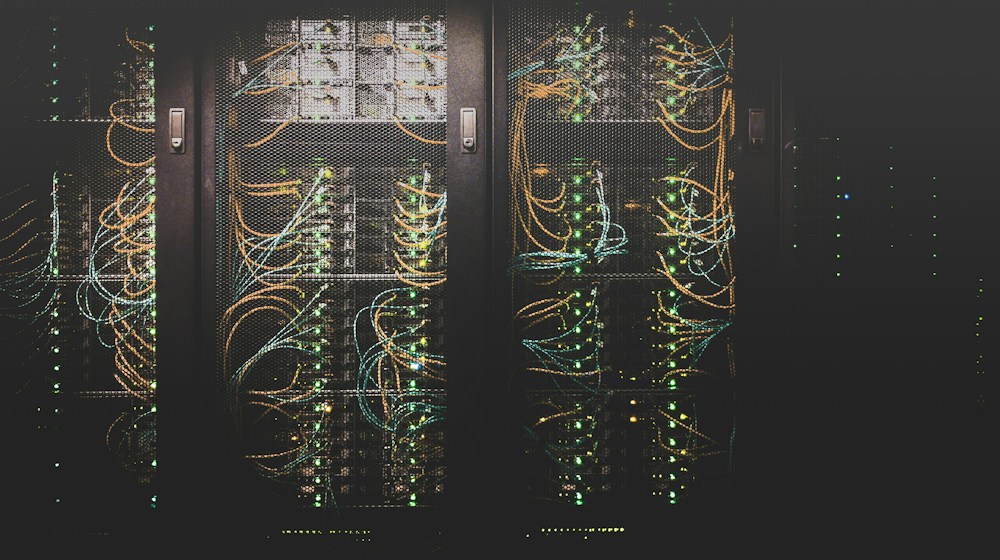 Figure 1: Industrial IoT (IIoT): Real-time vibration, thermal, and acoustic sensors executing predictive maintenance.
1. The Anatomy of an IoT Ecosystem: The Four Architectural Tiers
A production-grade IoT deployment is organized across four distinct functional tiers:
+--------------------------------------------------------------+
|                     THE 4-TIER IoT ARCHITECTURE              |
+--------------------------------------------------------------+
| [ TIER 1: SENSORS & ACTUATORS (The Physical Edge) ]          |
|   - Sensors: Measure physical reality (Temp, Pressure, Light)|
|   - Actuators: Cause physical changes (Valves, Relays, Motors)|
|   - Microcontrollers: ESP32, STM32, ARM Cortex-M0/M4         |
|                                |                             |
|                                v                             |
| [ TIER 2: CONNECTIVITY & PROTOCOL GATEWAYS ]                 |
|   - Local Wireless: Bluetooth LE, Zigbee, Z-Wave, Thread     |
|   - Wide-Area: LoRaWAN, NB-IoT, Cellular LTE-M, Wi-Fi 6      |
|   - Gateway aggregates and translates local radio to IP      |
|                                |                             |
|                                v                             |
| [ TIER 3: EDGE & CLOUD INGESTION BROKERS ]                   |
|   - High-throughput message brokers: MQTT, CoAP, Kafka       |
|   - Device Shadows, Authentication, Fleet Management         |
|                                |                             |
|                                v                             |
| [ TIER 4: ANALYTICS, STORAGE & APPLICATION LAYER ]           |
|   - Time-Series Databases (InfluxDB, TimescaleDB)            |
|   - Predictive Maintenance ML models, Mobile UI Dashboards   |
+--------------------------------------------------------------+
1. Sensing vs. Actuating
- Sensors (Input): Transducers that convert physical energy (kinetic vibrations, ambient photons, infrared heat, chemical gases) into analog electrical voltages, which an Analog-to-Digital Converter (ADC) translates into digital bytes.
- Actuators (Output): The kinetic muscles of IoT. Upon receiving a digital command from the cloud, an actuator triggers physical action: closing an automated water irrigation valve, engaging an emergency braking relay, or adjusting an HVAC dampener.
2. IoT Networking Protocols: Why HTTP Fails on Microcontrollers
 Figure 2: Lightweight telemetry: MQTT publish-subscribe broker coordinating millions of low-bandwidth sensor nodes.
In traditional web development, software communicates over HTTP/HTTPS. However, on battery-powered IoT microcontrollers deployed in the field, standard HTTP is disastrously inefficient:
- A single HTTP GET/POST request contains hundreds of bytes of verbose plaintext ASCII headers (
User-Agent,Accept-Encoding,Cookies). - Establishing a new TCP handshake and TLS session for every 2-byte temperature reading drains battery power rapidly.
The Standard: MQTT (Message Queuing Telemetry Transport)
Engineered by IBM and standardized under OASIS, MQTT is the undisputed lingua franca of the Internet of Things:
- Ultra-Lightweight Binary Header: The minimum fixed header of an MQTT packet is a mere 2 bytes, maximizing battery life over cellular connections.
- Publish-Subscribe (Pub/Sub) Architecture: Devices do not communicate directly with each other. They connect to a centralized MQTT Broker (e.g., HiveMQ, Eclipse Mosquitto, AWS IoT Core):
- A soil sensor publishes moisture telemetry to the topic:
sensors/agriculture/field_4/moisture. - Multiple irrigation controllers, cloud databases, and mobile apps subscribe to that topic. The broker routes messages instantaneously.
- A soil sensor publishes moisture telemetry to the topic:
- Quality of Service (QoS) Levels:
- QoS 0 (At most once): Fire-and-forget; best for non-critical frequent telemetry where occasional packet loss is acceptable.
- QoS 1 (At least once): Guarantees message arrival with cryptographic acknowledgment.
- QoS 2 (Exactly once): Four-step handshake guaranteeing zero duplicates; essential for billing or critical medical telemetry.
3. Industrial IoT (IIoT): The Factory Floor Revolution
While consumer smart homes (smart bulbs, smart thermostats) receive significant media attention, the true economic center of gravity of IoT is Industrial IoT (IIoT):
1. Predictive Maintenance vs. Reactive Break-Fix
In traditional heavy manufacturing, machinery is serviced reactively (after it breaks, causing catastrophic factory floor downtime) or on arbitrary calendar schedules (changing oil every 90 days regardless of wear).
- IIoT deploys high-frequency piezoelectric accelerometers directly onto pump bearings and generator turbines, recording thousands of vibrational oscillations per second.
- Cloud machine learning models analyze baseline harmonic resonance patterns. When microscopic micro-fractures develop inside a steel roller bearing, the vibration signature shifts by a fraction of a millimeter.
- The system automatically schedules maintenance weeks before the mechanical bearing physically fails, saving millions of dollars in catastrophic manufacturing shutdowns.
2. Fleet Logistics and Cold Chain Integrity
In global pharmaceutical and perishable food supply chains, IoT asset trackers equipped with cellular modems and temperature probes travel inside refrigerated cargo shipping containers. If a refrigerator unit fails in the middle of the Pacific Ocean, real-time satellite telemetry alerts logistics managers to reroute the container or dispatch emergency technicians, preventing millions of dollars in spoiled vaccines.
4. The Critical Achilles’ Heel: IoT Security Vulnerabilities
 Figure 3: Embedded IoT security: Hardware root of trust and encrypted firmware over-the-air (FOTA) updates.
The proliferation of billions of connected microcontrollers introduces acute, systemic cybersecurity risks:
Why IoT Devices Are Prime Targets for Hackers:
- Resource Constraints: Low-power 8-bit or 32-bit microcontrollers have minimal RAM (often under 256KB) and cannot run heavy security agents or complex modern cryptographic handshakes.
- Hardcoded Credentials & Neglected Firmware: Millions of inexpensive consumer IP cameras and smart routers ship with default, unchangeable credentials (
admin / admin). In 2016, the catastrophic Mirai Botnet enslaved hundreds of thousands of vulnerable IoT devices, launching a 1.2 Tbps DDoS attack that knocked out major portions of the US internet infrastructure. - Physical Tampering: Devices are frequently installed in public, accessible environments (utility poles, parking meters, building facades) where attackers can physically extract firmware from flash memory chips using JTAG or SPI bus sniffers.
The Modern IoT Security Blueprint:
- Hardware Root of Trust: Utilizing secure elements (such as Microchip ATECC608) that store private cryptographic keys in tamper-resistant physical hardware.
- Secure Boot & Firmware-Over-The-Air (FOTA): The microcontroller’s bootloader verifies the cryptographic digital signature of any incoming firmware update before writing it to flash, preventing malicious code injection.
- Zero Inbound Open Ports: IoT devices should never listen for inbound public connections; they must strictly initiate outbound encrypted TLS connections to the managed cloud broker.
Conclusion: The Programmable Planet
The Internet of Things is quietly orchestrating the physical world. As 5G connectivity expands, as low-power satellite constellations (such as Starlink Direct-to-Cell) blanket remote areas, and as tiny machine learning models (TinyML) execute inference directly on sub-dollar sensor silicon, the boundaries between software and the physical universe will dissolve. The Earth itself is becoming an instrumented, responsive, and programmable computational ecosystem.
The Matter Standard and Hardware-Rooted IoT Security
For over a decade, consumer and industrial IoT ecosystems suffered from acute fragmentation. Smart bulbs, security sensors, and smart thermostats operated across competing, incompatible wireless standards—Zigbee, Z-Wave, Bluetooth LE, and proprietary Wi-Fi implementations—leaving consumers stranded with dozen of uncoordinated mobile apps and unpatched network gateways.
Unifying the Smart Home via Matter and Thread
The introduction of Matter—an open-source, IP-based connectivity protocol backed by Apple, Google, Amazon, and the Connectivity Standards Alliance (CSA)—has unified smart hardware ecosystems.
Matter operates over IPv6, leveraging Wi-Fi or Ethernet for high-bandwidth devices and Thread (a low-power, self-healing mesh radio network) for battery-operated sensors. Key architectural advantages include:
- Local-First Control: Matter commands execute directly across the local area network without communicating with remote third-party cloud servers, ensuring light switches and door locks function seamlessly even during home broadband outages.
- Multi-Admin Interoperability: A single Matter sensor can be controlled simultaneously through Apple Home, Google Assistant, Amazon Alexa, and Home Assistant without cloud bridges or proprietary developer accounts.
+--------------------------------------------------------------+
|            Unified Matter & Thread Mesh Topology             |
+--------------------------------------------------------------+
| [Thread Mesh Devices] (Bulbs, Door Sensors, Thermostats)     |
|                      | Low-Power 802.15.4 Mesh Radio         |
|                      v                                       |
| [Thread Border Router] (Apple TV, Google Nest Hub)           |
|                      | Local IPv6 Encrypted Wi-Fi            |
|                      v                                       |
| [Local Network Controllers] (HomeKit, Home Assistant, Alexa) |
|                      *Zero Cloud Round-Trip Latency*         |
+--------------------------------------------------------------+
Hardware Secure Elements in Modern Microcontrollers
To permanently eliminate IoT botnets (such as Mirai), modern smart hardware integrates dedicated cryptographic Secure Elements (like Microchip ATECC608 or ESP32-S3 secure boot engines). Every device carries a cryptographically signed factory certificate burned into write-once memory, preventing unauthorized firmware tampering and guaranteeing zero-trust device identity across enterprise networks.
Predictive Maintenance and Digital Twin Modeling
In industrial environments, IoT telemetry feeds into real-time Digital Twins—virtual software replicas of physical wind turbines, jet engines, and factory assembly lines. Machine learning algorithms analyze continuous vibration and thermal sensor streams to predict component failure weeks before physical breakdown occurs, reducing unexpected operational downtime by up to 40%.


Quantum Computing Explained for Beginners
A clear, rigorous guide explaining quantum computing fundamentals: qubits, superposition, quantum entanglement, cryogenics, and the post-quantum cryptography transition.
How Blockchain Technology Actually Works
A comprehensive cryptographic breakdown of blockchain distributed ledgers, Byzantine Fault Tolerance, Proof of Work vs Proof of Stake, and smart contract state machines.

What Is Edge Computing and Why Is It Important?
A comprehensive architectural guide to edge computing, analyzing the speed-of-light latency constraints of cloud data centers, edge AI inference, and autonomous systems.