
Executive Summary: The Physics of Latency and the Return to the Edge
For the past fifteen years, the prevailing doctrine in enterprise software has been centralized consolidation: “Move everything to the cloud.” Organizations decommissioned local server closets, shut down regional branch appliances, and migrated workloads into hyperscale centralized data centers operated by AWS, Microsoft, and Google.
Centralized cloud computing offered unmatched economies of scale, simplified management, and infinite elasticity. However, as the digital economy expanded into autonomous robotics, augmented reality, industrial automation, and connected vehicles, centralized architecture slammed directly into an immutable physical law: The Speed of Light.
No matter how optimized your software code or how powerful the cloud data center, transmitting electrical or optical signals across 2,000 miles of terrestrial fiber cables incurs unavoidable physical propagation latency:
$$\text{Latency} \approx \frac{\text{Distance}}{\frac{2}{3} c} + \text{Routing Hops}$$
A round-trip packet from an autonomous vehicle in Dallas to a cloud data center in North Virginia and back takes between 50 to 100 milliseconds. If that vehicle is traveling at 65 mph, it travels over nine feet before receiving an obstacle avoidance command.
Edge Computing solves this crisis by inverting the cloud model: instead of moving raw data to the centralized cloud, it moves computational processing, storage, and machine learning inference directly to the edge of the network, within physical proximity of the data source.
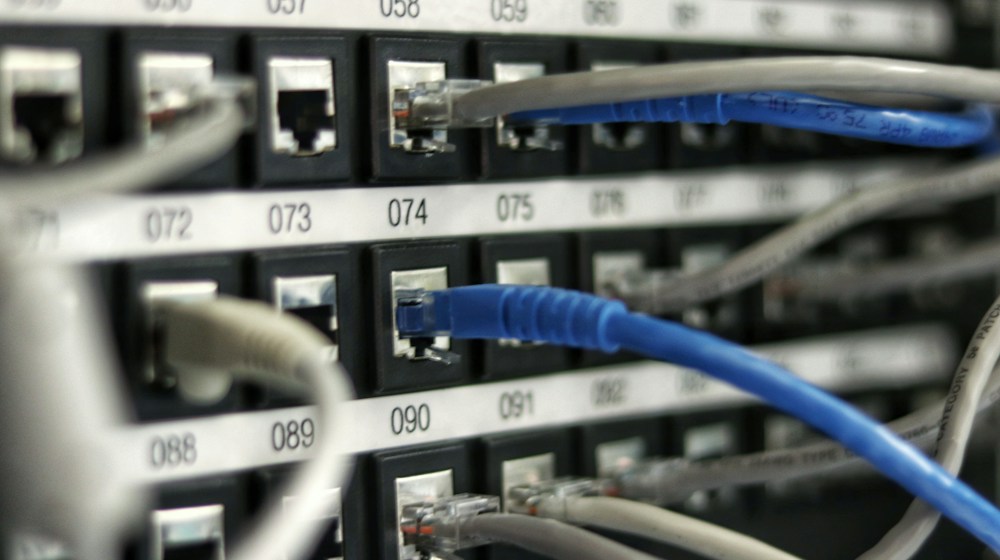 Figure 1: Centralized cloud computing versus Edge computing topology: Pushing compute to the physical periphery.
1. Defining “The Edge”: A Continuum of Compute
Where exactly is “the edge”? In computer science, the edge is not a single physical point; it is an architectural continuum of compute tiers extending from the centralized cloud core to the physical endpoint:
+-------------------------------------------------------------------------+
|                       THE CONTINUUM OF COMPUTE                          |
+-------------------------------------------------------------------------+
| [ CORE CLOUD ]            Hyperscale Data Centers (AWS us-east-1)       |
|                           - Massive compute, high storage, 50-100ms     |
|                                |                                        |
|                                v                                        |
| [ METRO / CDN EDGE ]      Telco 5G Base Stations, Edge Data Centers     |
|                           - Cloudflare Workers, AWS Wavelength, 10-20ms|
|                                |                                        |
|                                v                                        |
| [ ON-PREMISE EDGE ]       Factory Gateways, Hospital Server Closets     |
|                           - Local Kubernetes clusters, 2-5ms latency    |
|                                |                                        |
|                                v                                        |
| [ DEVICE EDGE ]           Smartphones, Autonomous Cars, Drones          |
|                           - Embedded NPUs, Raspberry Pi, Sub-1ms        |
+-------------------------------------------------------------------------+- Device Edge: Silicon microprocessors running on the physical device itself (such as an Apple Neural Engine or a Tesla Full Self-Driving chip). Latency: sub-1 millisecond.
- On-Premise Edge: Ruggedized server racks installed directly inside a hospital, automated warehouse, or offshore oil drilling platform (e.g., AWS Outposts, Azure Stack). Latency: 1 to 5 milliseconds.
- Network / Metro Edge: Edge servers deployed at telecommunications 5G cell towers and metropolitan Points of Presence (PoPs). Latency: 5 to 15 milliseconds.
2. The Three Primary Drivers of Edge Computing
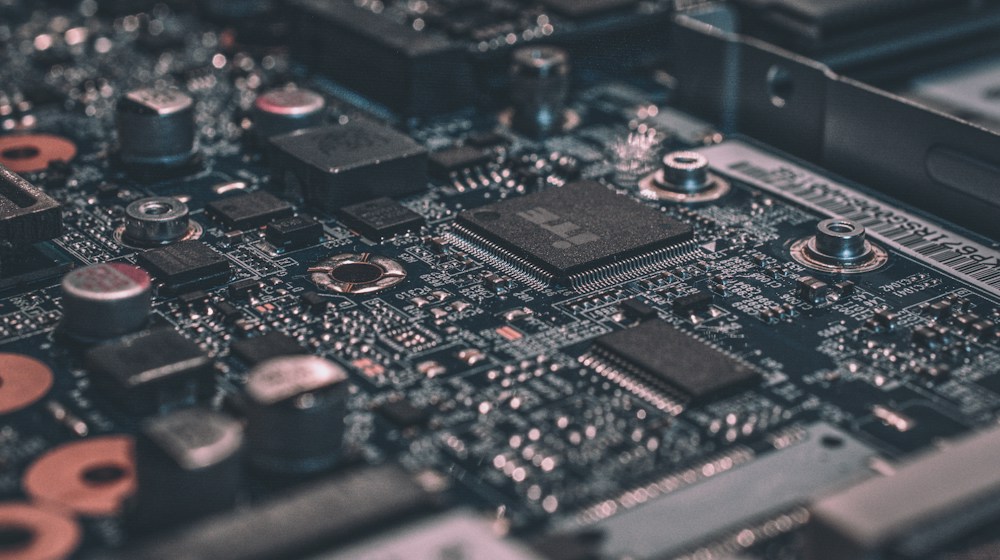 Figure 2: Ruggedized edge computing appliances deployed at base stations and cellular 5G towers.
Organizations adopt edge computing to conquer three acute operational barriers:
1. Latency (Real-Time Responsiveness)
Mission-critical systems cannot tolerate network jitter or cloud round-trips:
- Industrial Robotics: High-speed robotic packaging arms operating on assembly lines require sub-millisecond feedback loops to prevent mechanical collisions.
- Surgical Tele-Robotics: Remote robotic surgery demands zero perceptible visual or tactile latency to ensure surgeon precision.
2. Bandwidth Economics (The Data Deluge)
Moving massive volumes of unstructured raw data over wide-area networks (WAN) is prohibitively expensive and technically impractical:
- An offshore oil rig generates over 2 terabytes of sensor telemetry daily. In remote maritime environments, satellite uplink bandwidth is limited and costs thousands of dollars per gigabyte. Edge servers process, filter, and analyze the telemetry locally, transmitting only tiny, 10KB anomaly summaries to the central cloud.
- A smart city with 10,000 4K traffic surveillance cameras cannot stream 10,000 simultaneous 4K video feeds to the cloud without collapsing municipal broadband networks. Edge servers equipped with computer vision chips process the video locally, emitting only metadata:
"Blue sedan crossed intersection at 42 mph".
3. Reliability and Disconnected Autonomy
What happens when the internet connection goes down?
- A smart hospital operating theater cannot halt patient life-support systems because an undersea fiber optic cable was severed.
- A subterranean mining excavator must continue navigating dark underground tunnels even when severed from all external cloud connectivity. Edge systems guarantee autonomous local survivability.
3. Edge AI: Running Machine Learning on the Periphery
 Figure 3: Mission-critical safety: Autonomous vehicles executing obstacle avoidance inference in under 5 milliseconds.
The most transformative catalyst for edge computing is Edge AI. Historically, machine learning inference required massive cloud GPU clusters. However, breakthroughs in model quantization, knowledge distillation, and specialized Neural Processing Units (NPUs) have brought deep learning directly to low-power edge silicon:
- TinyML & Quantized Models: Shrinking 16-bit floating-point neural weights down to 8-bit or 4-bit integer representations (INT8 / INT4) with virtually zero loss in perceptual accuracy, allowing vision and audio models to run on $5 microcontrollers drawing milliwatts of power.
- Privacy Preservation: Voice assistants (such as Apple Siri or local LLMs) process your private spoken words directly on the smartphone’s local NPU. No audio recordings are ever transmitted across the internet to corporate servers, eliminating surveillance risks and GDPR non-compliance.
Comparative Breakdown: Cloud vs. Edge Computing
| Operational Vector | Centralized Cloud Computing | Edge Computing |
|---|---|---|
| Physical Location | Massive hyperscale regional data centers | Distributed at physical periphery (towers, factories, devices) |
| Network Latency | 30 to 100+ milliseconds | 1 to 10 milliseconds |
| Bandwidth Costs | High (All raw data must cross WAN transit) | Extremely Low (Data filtered locally; only metadata sent) |
| Offline Survivability | Fails completely during internet outage | Continues functioning autonomously |
| Scalability | Virtually infinite computational capacity | Bounded by local hardware thermal and electrical limits |
| Maintenance Model | Centralized, handled by cloud provider | Distributed fleet management, edge OTA update pipelines |
The Symbiotic Reality: The Cloud-Edge Continuum
Edge computing is not a replacement for the cloud; it is its natural, distributed extension. Modern enterprise architectures deploy an elegant, cooperative Cloud-Edge Continuum:
- The Edge Handles Real-Time Inference & Actuation: Edge nodes capture sensory data, execute instant machine learning inference, make sub-second operational decisions, and filter out noise.
- The Cloud Handles Global Aggregation & Model Training: The edge nodes asynchronously stream curated, high-value training anomalies and aggregated business metrics back to the central cloud. Hyperscale cloud GPU clusters aggregate this planetary dataset, train the next generation of foundation models, and distribute updated, optimized neural weights back down to the edge fleet via automated over-the-air (OTA) updates.
Conclusion: Computing Without Latency
By liberating computation from the geographic constraints of centralized data centers, edge computing fulfills the original promise of ubiquitous computing. From autonomous vehicles navigating crowded urban streets to intelligent medical biosensors saving lives in real time, edge computing ensures that digital intelligence is delivered precisely where physical life happens: immediately, autonomously, and with zero latency.
Multi-Access Edge Computing (MEC) and Autonomous Drone Corridors
The fusion of 5G telecommunication networks and edge computing has given rise to Multi-Access Edge Computing (MEC). By situating high-density compute server racks directly inside cellular base stations and telco central offices, network operators eliminate round-trip backhaul latency over public internet backbones.
Powering Autonomous Drone Logistics
Autonomous delivery drones and urban air mobility vehicles require real-time 3D flight path optimization, dynamic obstacle avoidance, and airspace deconfliction. Transmitting raw multi-camera video streams and point-cloud LiDAR data to centralized hyperscale cloud regions introduces 50 to 150 milliseconds of latency—an unacceptable delay for aerial vehicles traveling at 60 kilometers per hour.
+--------------------------------------------------------------+
|            Autonomous Edge Flight Control Architecture       |
+--------------------------------------------------------------+
| [Autonomous Delivery Drone Fleet]                            |
|             | Ultra-Reliable Low-Latency Communication (URLLC)|
|             v                                                |
| [5G Cellular Base Station Tower]                             |
|             | Direct Local Fiber Interconnect                |
|             v                                                |
| [Telco MEC Micro Data Center (<5ms Latency)]                 |
| - Real-Time 3D Airspace Deconfliction Model                  |
| - Weather Micro-Turbulence Sensor Fusion                     |
| - Instantaneous Dynamic Re-routing Vector Dispatches         |
+--------------------------------------------------------------+
With MEC nodes deployed within a few kilometers of flight corridors, drones stream sensor telemetry over 5G Ultra-Reliable Low-Latency Communication (URLLC) slices directly to the localized cell tower edge. Edge neural networks synthesize localized airspace collision vectors and dispatch trajectory corrections back to drone autopilots in under 5 milliseconds, ensuring safe autonomous operations even through dense metropolitan skylines.
Strategic Edge Governance and Lifecycle Management
Operating thousands of remote edge clusters requires zero-touch provisioning and automated policy enforcement. Telecommunications engineers utilize declarative GitOps repositories to roll out container image updates to edge gateways globally during low-traffic maintenance windows, rolling back automatically if anomalous latency or packet loss is detected by localized health probes.
Real-Time Fleet Telemetry and Operational Resilience
Centralized fleet dashboards receive aggregated operational summaries while high-frequency microsecond control loops remain strictly localized at the edge, ensuring zero service disruption even during cellular carrier brownouts.


Quantum Computing Explained for Beginners
A clear, rigorous guide explaining quantum computing fundamentals: qubits, superposition, quantum entanglement, cryogenics, and the post-quantum cryptography transition.
How Blockchain Technology Actually Works
A comprehensive cryptographic breakdown of blockchain distributed ledgers, Byzantine Fault Tolerance, Proof of Work vs Proof of Stake, and smart contract state machines.
Understanding the Internet of Things (IoT)
A comprehensive investigation into IoT architectures, MQTT protocol messaging, sensor edge telemetry, smart industrial grids, and embedded device security.