
Executive Summary: The Generative AI Paradigm Shift
Generative Artificial Intelligence represents one of the most consequential paradigm shifts in the history of computation. Unlike discriminative machine learning models—which historically focused on classification, regression, and pattern recognition by computing the conditional probability P(Y|X)—generative models model the joint probability distribution P(X, Y) or the data distribution P(X) directly. This fundamental mathematical distinction allows generative algorithms to synthesize entirely novel, high-fidelity artifacts across text, software code, photorealistic imagery, synthetic audio, and macromolecular structures.
Across the global enterprise landscape, organizations are transitioning from speculative pilot projects to mission-critical production deployments. From automating complex software engineering workflows to accelerating drug discovery pipelines from decades to months, generative AI is redefining economic productivity and operational velocity.
 Figure 1: High-dimensional latent space representations and attention mechanisms in modern generative foundation models.
Architectural Foundations: Transformers and Latent Diffusion
The accelerated ascendance of generative AI can be traced directly to architectural breakthroughs in deep neural networks over the past decade. Two dominant architectures form the bedrock of contemporary generative systems:
1. The Transformer Architecture and Self-Attention
Introduced by Vaswani et al. in the landmark 2017 paper “Attention Is All You Need”, the transformer discarded recurrent neural network (RNN) and convolutional neural network (CNN) architectures in favor of the Scaled Dot-Product Self-Attention mechanism:
$$\text{Attention}(Q, K, V) = \text{softmax}\left(\frac{QK^T}{\sqrt{d_k}}\right)V$$
Where:
- Q (Queries): Vector representations of the current token seeking contextual alignment.
- K (Keys): Vector indices across all input tokens against which queries are evaluated.
- V (Values): Contextual embeddings weighted by normalized attention coefficients.
- d_k: Dimensional scaling factor preventing vanishing gradients during softmax evaluation.
By computing attention simultaneously across all tokens rather than sequentially processing inputs, transformers facilitated unprecedented parallelization on modern GPU clusters. This breakthrough directly enabled models to scale from millions of parameters to hundreds of billions—and now trillions—of parameters across dense and Mixture-of-Experts (MoE) architectures.
2. Denoising Diffusion Probabilistic Models (DDPMs)
In visual, audio, and physical synthesis, Diffusion Models have superseded Generative Adversarial Networks (GANs). Operating via a dual-phase stochastic process:
- Forward Process (Markov Chain): Systematically adds Gaussian noise to high-dimensional image data over T timesteps until the signal degenerates into pure isotropic noise.
- Reverse Process (Learned Denoising): Employs a U-Net or transformer backbone conditioned on text embeddings (via cross-attention) to iteratively subtract predicted noise, synthesizing pristine, high-fidelity imagery from stochastic thermal noise.
Comparative Breakdown: Traditional Machine Learning vs. Generative AI
To contextualize enterprise deployment strategies, consider the architectural and operational contrasts between traditional discriminative systems and generative architectures:
| Operational Dimension | Traditional Predictive ML | Generative Foundation Models |
|---|---|---|
| Objective Function | Classification, regression, clustering | Modeling latent data distributions & generative token prediction |
| Data Requirement | Highly curated, task-specific labeled datasets | Massive multi-terabyte web-scale uncurated data + targeted RLHF |
| Adaptability | Narrow, single-task domain specific | General-purpose zero-shot and few-shot in-context learning |
| Inference Hardware | Standard CPUs or commodity accelerator cards | High-memory bandwidth accelerators (H100, B200, TPU v5p) |
| Output Modality | Categorical probabilities, scalar floats, rankings | Multi-modal text, executable code, high-resolution media |
| Failure Modes | Overfitting, concept drift, boundary errors | Hallucination, alignment drift, catastrophic forgetting |
Industrial Transformation Across Core Verticals
 Figure 2: Enterprise automation pipeline integrating generative design algorithms into physical fabrication.
1. Software Engineering and DevOps
Software engineering has experienced the most immediate and profound impact. Code-generation foundation models—such as OpenAI Codex, Claude 3.5 Sonnet, and StarCoder—act as deterministic copilots and autonomous agentic coders. Beyond rudimentary autocomplete, generative systems now perform:
- Automated Refactoring & Migration: Translating legacy COBOL or Java 8 codebases into modernized Rust or Go microservices with complete test harnesses.
- Synthesized Test Coverage: Generating edge-case unit and integration tests based on static AST (Abstract Syntax Tree) analysis.
- Infrastructure as Code (IaC): Converting high-level architectural requirements into validated Terraform, Kubernetes Helm charts, and AWS CloudFormation manifests.
2. Healthcare, Biotechnology, and Protein Synthesis
In life sciences, generative models have bypassed classical empirical screening. Systems like AlphaFold and generative diffusion networks for de novo molecular design treat amino acid sequences as biological syntax:
- Antibody Design: Generating synthetic therapeutic antibodies engineered to bind specific pathogenic epitopes with atomic precision.
- Clinical Documentation: Fine-tuned clinical language models synthesize unstructured doctor-patient audio transcripts into structured EHR (Electronic Health Record) clinical summaries, reducing administrative overhead by upwards of 40%.
3. Financial Services and Quantitative Risk Modeling
In tier-one banking and capital markets, generative models are transforming risk governance and fraud detection:
- Synthetic Market Scenarios: Generating synthetic financial stress-testing data reflecting high-volatility liquidity shocks without violating customer data privacy.
- Automated Contract Audit: Parsing thousand-page syndicated loan agreements, cross-referencing regulatory compliance frameworks, and isolating counterparty risk clauses in seconds.
Enterprise Infrastructure and Computational Economics
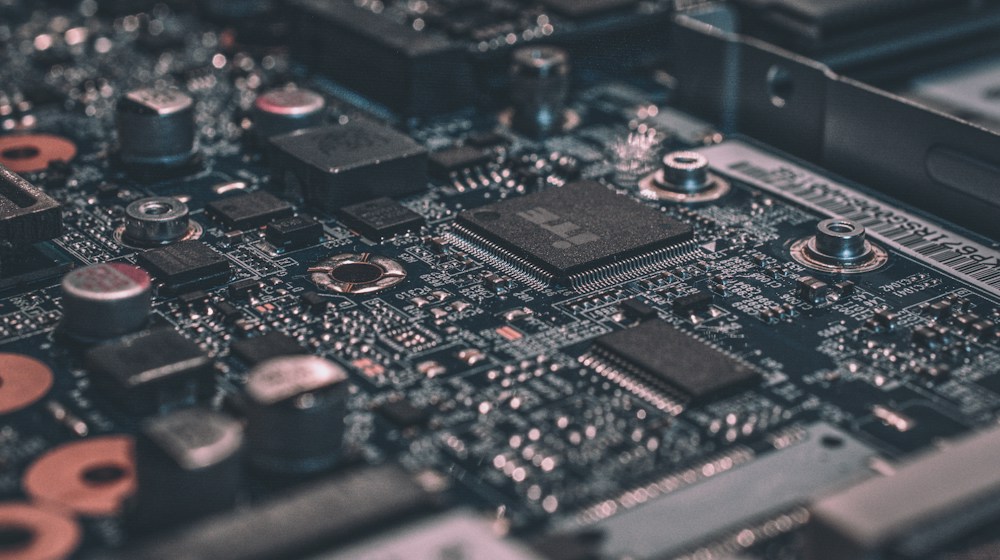 Figure 3: High-throughput tensor processing units (TPUs) and GPU clusters driving multi-trillion parameter training runs.
Deploying generative models into production environments presents acute architectural and budgetary hurdles. Engineering teams must navigate the Memory Wall and the economics of Floating Point Operations per Second (FLOPs).
Inference Optimization Techniques
- Quantization (INT8, FP4, AWQ): Reducing weight precision from 16-bit floating point (FP16/BF16) to 4-bit integer representations with negligible perplexity degradation, halving VRAM footprints and multiplying token throughput.
- PagedAttention & vLLM: Eliminating KV-cache memory fragmentation by allocating key-value states dynamically in non-contiguous virtual memory blocks, unlocking 3x to 5x concurrency improvements on single GPU instances.
- Speculative Decoding: Utilizing small, low-latency draft models to propose candidate token sequences validated in parallel by the primary foundation model, slashing latency per token by up to 60%.
Retrieval-Augmented Generation (RAG) Architecture
Rather than retraining multi-billion parameter foundation models to incorporate proprietary knowledge, enterprise architects rely on advanced RAG patterns:
- Hybrid Retrieval: Blending dense vector embeddings (using HNSW or ScaNN indexing) with sparse lexical algorithms (BM25) to maximize precision and recall.
- Contextual Reranking: Deploying cross-encoder rerankers to winnow down candidate document chunks before injection into the prompt context window.
- Graph RAG: Extracting structured knowledge graphs (entities, relations, properties) from enterprise data to provide structural reasoning capabilities that standard vector databases cannot resolve.
Critical Challenges: Hallucinations, Safety, and Governance
Despite astonishing capabilities, generative AI deployment introduces severe operational risks that demand defensive engineering:
- Stochastic Hallucination: Language models are probabilistic next-token predictors, not epistemological reasoning engines. They can generate authoritative-sounding falsities with absolute mathematical confidence. Mitigations require strict guardrails, semantic entropy measurement, and ground-truth validation layers.
- Prompt Injection and Jailbreaking: Direct and indirect prompt injection attacks can manipulate model context, leaking system prompts or exfiltrating private database records accessible via tool-calling APIs.
- Intellectual Property and Copyright: The inclusion of copyrighted source code, artistic compositions, and editorial writing in web-scale training corpora has sparked ongoing global litigation regarding fair use, copyright infringement, and data provenance.
Strategic Roadmap: What Lies Ahead for Enterprise AI
As we look toward the remainder of the decade, the trajectory of generative AI is converging on three distinct technological frontiers:
- Autonomous Multi-Agent Systems: Transitioning from passive question-answering bots to proactive agents equipped with tool-use capabilities, persistent episodic memory, and hierarchical task planning.
- Reasoning Models (System 2 Thinking): Architectures that employ reinforcement learning over test-time compute (such as tree-of-thought exploration and self-correction) to solve complex mathematical, logic, and architectural challenges before emitting an answer.
- Edge Foundation Models: Highly distilled 1B to 3B parameter models running entirely on client-side NPUs inside smartphones, automobiles, and industrial edge controllers with zero cloud latency and total privacy.
Organizations that master the integration of foundation models with deterministic enterprise systems will secure an insurmountable competitive advantage in the decade ahead.
Enterprise Architecture Blueprint: Production Generative AI Stack
Modern enterprise generative AI deployments require a resilient, multi-tiered infrastructure stack designed for low latency, cost efficiency, and enterprise data governance:
+--------------------------------------------------------------------------+
|                  ENTERPRISE FOUNDATION MODEL ARCHITECTURE                |
+--------------------------------------------------------------------------+
| 1. Application Layer       -> Web Portals, Mobile Clients, Copilots       |
| 2. Gateway & Governance    -> Prompt firewalls, PII masking, Rate limits |
| 3. Orchestration Engine   -> LangChain, LlamaIndex, Semantic Kernel     |
| 4. Vector Knowledge Layer  -> Pinecone, Qdrant, Milvus, pgvector         |
| 5. Inference Optimization  -> vLLM, TensorRT-LLM, Speculative Decoding   |
| 6. Silicon Compute Fabric -> NVIDIA H100/H200, Google TPU v5p, AWS Trainium|
+--------------------------------------------------------------------------+
Strategic Best Practices for Enterprise AI Procurement
- Model Agnosticism: Never hardcode your application to a single commercial model provider’s proprietary API. Always utilize unified abstraction layers (such as LiteLLM or LangChain) that allow seamless switching between OpenAI, Anthropic, Google, and self-hosted open-source models (Llama 3, Mistral) based on cost, latency, and operational availability.
- Data Sovereignty and Isolation: Ensure that vendor service level agreements (SLAs) explicitly state that customer prompts and proprietary corporate data will never be utilized for training or fine-tuning foundation models.
- Semantic Caching: Deploy in-memory semantic caches (e.g., GPTCache) in front of model gateways. If a user submits a query semantically equivalent to a question answered five minutes earlier, return the cached response instantly, slashing API costs and response latency by up to 80%.
Case Study: Generative Optimization in Aerospace Engineering
In a recent deployment by a major aerospace manufacturer, generative AI models were integrated directly into the structural design pipeline for airframe bracket components:
- Traditional Methodology: Human CAD engineers designed titanium support brackets based on standard geometric rules. The design process required 6 weeks of finite element analysis (FEA) and resulted in a bracket weighing 1.8 kilograms.
- Generative Design Pipeline: An evolutionary generative algorithm was tasked with minimizing component mass while maintaining structural integrity under 15,000 Newtons of multi-axis torsional stress.
- Results: The algorithm synthesized an organic, lattice-structured titanium bracket fabricated via additive 3D metal laser sintering. The generative component achieved an identical safety factor while reducing mass by 42% (down to 1.04 kilograms), translating to millions of dollars in long-term aircraft fuel savings over the fleet’s operational lifetime.
Frequently Asked Questions (FAQ)
What is the difference between fine-tuning and Retrieval-Augmented Generation (RAG)?
Fine-tuning modifies the internal parametric weights of a model by training it on specific domain text, teaching it new stylistic patterns or specialized vocabulary. However, fine-tuning is expensive, risks catastrophic forgetting, and can still hallucinate. RAG, by contrast, leaves the model weights untouched; it retrieves verified, real-time facts from an external database and injects them directly into the prompt context window as reference material, ensuring transparent citations and eliminating stale data.


AI Agents Explained: How Autonomous Artificial Intelligence Works
A comprehensive deep dive into autonomous AI agents, multi-agent frameworks, tool usage, planning algorithms, and real-world enterprise agentic orchestration.

Machine Learning vs Deep Learning: Key Differences Explained
An architectural breakdown distinguishing classical statistical machine learning from multi-layered deep neural representations, training dynamics, and deployment economics.

The Future of Artificial Intelligence in Everyday Life
Examining how pervasive ambient intelligence, smart edge silicon, personalized healthcare diagnostics, and autonomous urban mobility will reshape daily living.