
Introduction: The Transition to Ambient Intelligence
Throughout the history of personal computing, interaction with digital technology has required deliberate, focused human intervention. Users sat before desktop terminals, manipulated handheld smartphone glass, or clicked search buttons. Digital services were destinations—explicit environments entered and exited at will.
The future of Artificial Intelligence in everyday life marks the end of deliberate computing and the dawn of Ambient Intelligence. In this emerging reality, AI ceases to be a destination application; it becomes an invisible, pervasive utility woven into the physical architecture of homes, transportation grids, clinical healthcare systems, and workplace environments. Powered by energy-efficient edge silicon and ultra-low latency wireless networks, AI systems will proactively anticipate human needs, orchestrate physical environments, and eliminate administrative friction.
 Figure 1: Human-AI cognitive collaboration across daily knowledge and lifestyle workflows.
1. Proactive Personal Healthcare and Continuous Diagnostics
Of all the transformations promised by pervasive AI, none holds more profound implications for human longevity than the revolution in predictive and personalized medicine.
Continuous Biometric Telemetry
Modern consumer wearables—smartwatches, smart rings, and continuous biosensors—already record heart rate variability, peripheral oxygen saturation, skin temperature, and sleep architecture. Today, these metrics are presented as passive graphs. In the immediate future, local on-device neural models will synthesize these disparate biometric streams into a unified physiologic twin:
- Early Pathogen Detection: Identifying cytokine release cascades and viral incubations up to 48 hours prior to symptomatic manifestation through subtle micro-deviations in nocturnal baseline core temperature and vascular stiffness.
- Cardiovascular Anomaly Prediction: Utilizing machine learning models trained on millions of clinical Holter monitors to predict paroxysmal atrial fibrillation, ventricular arrhythmias, and congestive heart failure decompensation days before clinical episodes occur.
 Figure 2: Proactive genomic medicine: Continuous biometric telemetry integrated with personal AI health models.
Democratization of Clinical Expertise
By combining high-resolution visual foundation models with clinical reasoning engines, everyday diagnostic triage will occur in the home:
- Dermatological assessments evaluating melanocytic lesions and inflammatory dermatoses via smartphone cameras.
- Retinal scanning utilizing low-cost optical attachments to screen for diabetic retinopathy, hypertensive microvascular damage, and early signs of neurodegenerative decline (such as Alzheimer’s disease).
2. Autonomous Mobility and the Reimagined Urban Fabric
The daily commute is historically characterized by stress, kinetic accidents, and wasted human productivity. Autonomous driving systems—relying on multimodal transformer architectures combining vision, LiDAR, radar, and acoustic telemetry—are systematically addressing these challenges.
 Figure 3: Intelligent urban traffic orchestration powered by distributed edge sensor networks.
Fleet Electrification and Mobility-as-a-Service (MaaS)
As Level 4 autonomous vehicle fleets scale in major metropolitan areas, the economic logic of private automobile ownership will decline. Autonomous, shared electric transport pods will fulfill urban transit demands:
- Zero Traffic Fatalities: Human driver error accounts for over 90% of global motor vehicle fatalities. Algorithmic perception systems possessing 360-degree vision, sub-millisecond reaction times, and zero cognitive fatigue will drive casualty rates toward zero.
- Urban Reclamation: Up to 30% of prime urban land in contemporary cities is dedicated to vehicular parking. Autonomous fleet deployment will permit the reclamation of asphalt parking garages and street stalls for public green spaces, affordable housing, and pedestrian boulevards.
- Dynamic Traffic Orchestration: Centralized municipal AI coordinators will communicate with autonomous fleets via Vehicle-to-Infrastructure (V2I) protocols, eliminating stop-and-go shockwaves and adjusting traffic signal phasing dynamically based on real-time pedestrian and passenger density.
3. Cognitive Co-Pilots and the Evolution of Knowledge Work
In everyday professional life, AI will fundamentally alter the nature of intellectual output. Rather than performing manual data synthesis, professionals will operate as executive directors of specialized agent swarms.
Daily Lifestyle and Personal Organization
Consider the friction inherent in modern personal logistics: managing tax declarations, comparing medical insurance policies, coordinating family schedules, and booking travel. Personal AI co-pilots with access to local episodic memory will operate as fully authorized digital concierges:
- Autonomous Procurement: Analyzing household inventory, monitoring commodity pricing trends across suppliers, and executing bulk replenishment orders at optimal economic thresholds without requiring manual approval.
- Contextual Communication Triage: Processing thousands of daily digital notifications, summarizing critical enterprise communications, and drafting bespoke responses aligned perfectly with the user’s authentic personal tone and organizational authority.
4. Ethical, Privacy, and Societal Imperatives
The pervasive integration of artificial intelligence into everyday existence introduces formidable societal challenges that must be addressed through technical safeguards and public policy:
| Societal Vector | Emerging Risk | Defensive Strategy / Mitigation |
|---|---|---|
| Data Privacy & Surveillance | Ubiquitous ambient listening and biometric profiling | On-device edge processing, Differential Privacy, Federated Learning |
| Cognitive Atrophy | Excessive reliance on algorithmic synthesis eroding critical human reasoning | Educational paradigms emphasizing synthesis, epistemology, and foundational logic |
| Algorithmic Monoculture | Recommendation engines homogenizing global cultural and political discourse | Decentralized algorithms, user-controllable objective functions, transparent ranking code |
| Digital Divide | Disparities in access to premium reasoning models compounding socioeconomic inequality | Open-source foundation models, public digital computing infrastructure utilities |
Conclusion: Designing an Abundant Human Future
Artificial Intelligence in everyday life will not resemble science fiction dystopias of cold, mechanical domination. Properly engineered and ethically bounded, it will manifest as an amplifier of human capability—relieving humanity of administrative drudgery, eliminating preventable medical tragedies, restoring urban environments, and democratizing access to elite education and healthcare. The challenge before engineers, policymakers, and citizens is to ensure that these technologies are architected with transparency, equity, and human agency placed unconditionally at the center of the computational equation.
Societal Impact Analysis: Employment, Education, and Cognitive Augmentation
As artificial intelligence permeates everyday life, its economic and cognitive implications will reshape foundational societal institutions:
The Metamorphosis of Education
The industrial-era model of education—where thirty students sit in rows listening to a single instructor lecture at a standardized pace—is being dismantled by personalized AI tutors:
- Adaptive Cognitive Pacing: An AI tutor continuously assesses a student’s conceptual mastery, identifying that a student struggles with fractional division not because of mathematical inability, but because of an unaddressed gap in multiplication tables three grade levels prior.
- Socratic Interactive Dialogue: Rather than providing direct answers, educational AI guides students through dialectical inquiry, cultivating critical thinking, philosophical reasoning, and problem-solving resilience.
Workforce Transition and Cognitive Augmentation
Historical industrial revolutions automated manual physical labor (steam engines replacing muscle power). The AI revolution automates repetitive cognitive labor:
- Routine administrative synthesis, medical transcription, legal discovery document review, and boilerplate coding are becoming automated utilities.
- The premium human skills of the 21st century are shifting toward epistemological judgment, systems architecture, ethical governance, empathetic caregiving, and interdisciplinary synthesis.
Architectural Deep Dive: On-Device Small Language Models (SLMs)
Ambient intelligence cannot rely exclusively on sending private sensory data to remote hyperscale data centers. The future belongs to On-Device Small Language Models (SLMs) running locally on mobile silicon:
- Models parameterized between 1 billion and 3.8 billion weights (e.g., Microsoft Phi-3, Google Gemini Nano, Apple OpenELM).
- Quantization down to 4-bit integer weights (INT4) allows these models to fit inside under 2 gigabytes of unified smartphone memory.
- Capable of executing over 30 tokens per second on smartphone Neural Processing Units (NPUs) while drawing under 2 watts of battery power.
- Ensures that sensitive personal context—health metrics, personal diary entries, and intimate family photographs—never leaves the physical device.
Frequently Asked Questions (FAQ)
Will artificial intelligence make human professionals obsolete?
Historically, automation does not eliminate human employment; it eliminates specific tasks and reorganizes occupations. Radiologists, for example, have not been replaced by computer vision; instead, AI automates the tedious screening of thousands of clear chest X-rays, empowering radiologists to dedicate significantly more clinical time to complex oncology diagnostics and compassionate patient consultations.
Ethical Guardrails, Algorithmic Bias, and Societal Impact
As artificial intelligence permeates everyday infrastructure, society confronts unprecedented questions surrounding algorithmic accountability, digital equity, and cognitive privacy. When AI systems influence mortgage approvals, university admissions, and medical diagnostics, the transparency of their underlying decision-making algorithms becomes a civil rights imperative.
Mitigating Algorithmic Bias in Daily Interactions
Biases present in historical training datasets inevitably surface in generative and predictive models unless explicitly counteracted through mathematical debiasing techniques and rigorous human oversight.
| Domain | Historical AI Vulnerability | Modern Mitigation Framework |
|---|---|---|
| Credit Underwriting | Historical zip code bias in automated risk scoring | Adversarial debiasing and demographic parity metrics |
| Automated Hiring | Keyword filtering penalizing non-traditional career paths | Blind skill-based evaluations and counterfactual testing |
| Healthcare Diagnostics | Image recognition inaccuracy on diverse skin tones | Balanced multi-demographic image dataset fine-tuning |
| Predictive Policing | Disproportionate patrol allocation based on arrest records | Algorithmic audit mandates and community review boards |
Modern regulatory frameworks, notably the European Union AI Act and international safety standards, categorize AI applications into strict risk tiers. High-risk systems affecting human safety or fundamental rights require rigorous third-party auditing, continuous post-deployment monitoring, and explicit explainability logs.
Cognitive Privacy and the Ambient Computing Horizon
As ambient listening devices, smart glasses, and context-aware wearables evolve into constant companions, personal data telemetry reaches unprecedented intimacy. Voice inflections, gaze patterns, biometric heart rates, and micro-expressions can reveal emotional states and health conditions before an individual consciously realizes them.
+--------------------------------------------------------------+
|            The Hierarchy of Everyday AI Interaction           |
+--------------------------------------------------------------+
| [Tier 4] Autonomous Decision-Making: Self-driving, health dx  |
| [Tier 3] Proactive Ambient Assist: Predictive scheduling, IoT |
| [Tier 2] Interactive Generative Assist: Writing, code, speech|
| [Tier 1] Reactive Search & Recommendation: Feeds, navigation |
+--------------------------------------------------------------+
Protecting cognitive privacy requires a fundamental architectural pivot toward local, on-device processing. Rather than transmitting raw biometric audio streams and video feeds to centralized corporate cloud servers, next-generation AI hardware leverages dedicated Neural Processing Units (NPUs) operating entirely at the edge. Federated learning frameworks enable global machine learning models to learn from collective user insights while ensuring raw personal telemetry never leaves the physical smartphone or smart home hub.

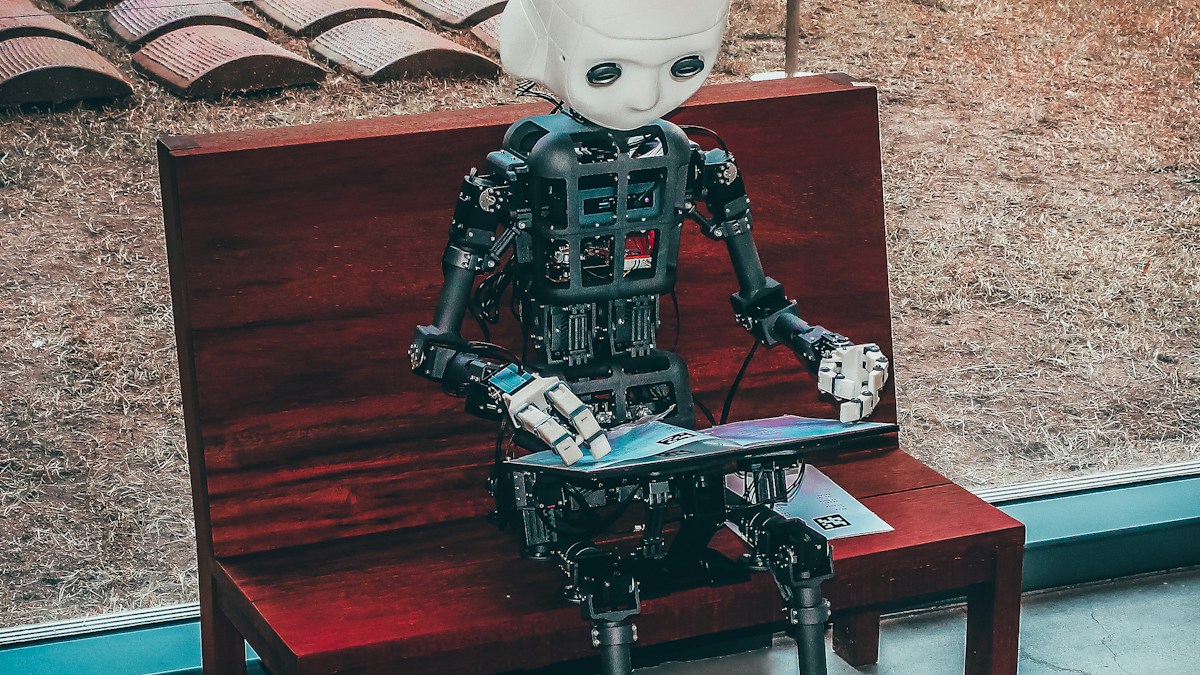
Understanding Generative AI and How It Is Transforming Modern Industries
An exhaustive analysis of generative artificial intelligence, exploring transformer architectures, diffusion models, multi-modal systems, and enterprise industrial disruption.
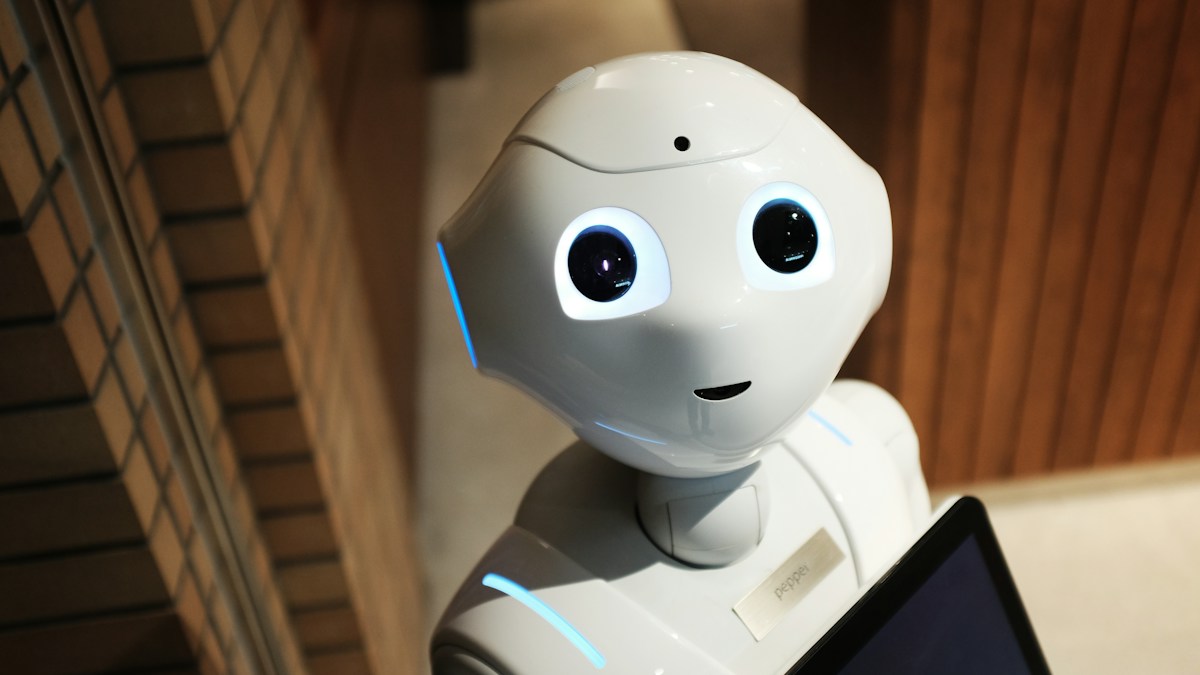
AI Agents Explained: How Autonomous Artificial Intelligence Works
A comprehensive deep dive into autonomous AI agents, multi-agent frameworks, tool usage, planning algorithms, and real-world enterprise agentic orchestration.

Machine Learning vs Deep Learning: Key Differences Explained
An architectural breakdown distinguishing classical statistical machine learning from multi-layered deep neural representations, training dynamics, and deployment economics.