
Executive Summary: The Modern Web Application Paradigm
Building a web application today bears almost no resemblance to the methodologies of a decade ago. In the late 2000s and early 2010s, the standard architecture was the monolithic LAMP Stack (Linux, Apache, MySQL, PHP). A single monolithic codebase ran on a single physical or virtual server, tightly coupling HTML template generation with direct SQL database queries. When the server experienced a memory leak or a traffic spike, the entire application collapsed.
Today, modern web applications are engineered as distributed, resilient, cloud-native systems. Built on the principles of decoupling, immutable deployment, edge delivery, and declarative infrastructure, contemporary platforms achieve sub-second global response times, five-nines availability, and continuous deployment velocities where code is pushed to production dozens of times per day.
In this deep architectural walkthrough, we trace the complete lifecycle and anatomical layers of how modern web applications are designed, built, and operated.
 Figure 1: The Modern Web Stack: Edge CDNs, decoupled APIs, serverless backends, and distributed data stores.
1. The Anatomy of the Modern Web Stack
A state-of-the-art web application is constructed across five decoupled functional layers:
[ LAYER 1: CLIENT USER INTERFACE ]
  - Responsive Component Systems (TypeScript, Tailwind CSS, Astro / React)
  - Accessible Semantic HTML5 & Islands of Interactivity
                           |
                           v
[ LAYER 2: GLOBAL EDGE DELIVERY (CDN) ]
  - Edge Reverse Proxies (Cloudflare, Vercel, AWS CloudFront)
  - Edge Caching, TLS 1.3 Termination, WAF Security, Anycast Routing
                           |
                           v
[ LAYER 3: APPLICATION API GATEWAY ]
  - Microservices, Serverless Functions (AWS Lambda, Cloudflare Workers)
  - GraphQL / REST Endpoints, OAuth 2.0 / OIDC Authentication
                           |
                           v
[ LAYER 4: DISTRIBUTED DATA PERSISTENCE ]
  - Serverless Relational DBs (PostgreSQL, PlanetScale, Supabase)
  - In-Memory Caches (Redis), Distributed Object Stores (S3, R2)
                           |
                           v
[ LAYER 5: OBSERVABILITY & CI/CD AUTOMATION ]
  - GitHub Actions, Datadog / OpenTelemetry, Sentry Error Tracking
2. Layer 1: Component-Driven Frontend Design Systems
Modern frontend development begins with a standardized Design System:
- Atomic Component Architecture: UI elements are constructed hierarchically—from atoms (buttons, badges, input fields) to molecules (search bars, author cards) and organisms (headers, hero grids, navigation drawers).
- Utility-First Styling: Modern teams favor utility frameworks (Tailwind CSS) or design token architectures over sprawling, unmaintainable CSS stylesheets. This ensures visual consistency and eliminates dead CSS bloat.
- Type-Safe Contract Enforcement: TypeScript is now universal. Frontends define strict interfaces for all API responses, catching schema regressions and undefined variable errors during the local build rather than in end-user browsers.
3. Layer 2: The Global Edge and Static Site Generation (SSG)
 Figure 2: The automated CI/CD lifecycle: Git push triggers automated linting, unit tests, preview branches, and global edge propagation.
One of the most profound revolutions in web architecture is the migration of compute and content to The Global Edge:
- Static Site Generation (SSG): For content-driven platforms (like PrimeTechSync), HTML pages are pre-rendered at compile time from Markdown or CMS content collections. Because pages are pure static files, there is zero database query latency when a user visits an article.
- Anycast BGP Edge Networks: Platforms like Cloudflare Pages host static assets across hundreds of edge data centers worldwide. When a reader in Tokyo requests a page, the asset is served from a data center 3 miles away in under 15 milliseconds, without ever touching an origin server in North America.
- Edge Functions: Lightweight JavaScript / WebAssembly runtimes executing directly on CDN edge nodes (in under 5 milliseconds) to handle geographic routing, A/B testing, and authentication validation without cold starts.
4. Layer 3 & 4: Decoupled APIs and Distributed Data
Behind the edge presentation layer resides the dynamic engine:
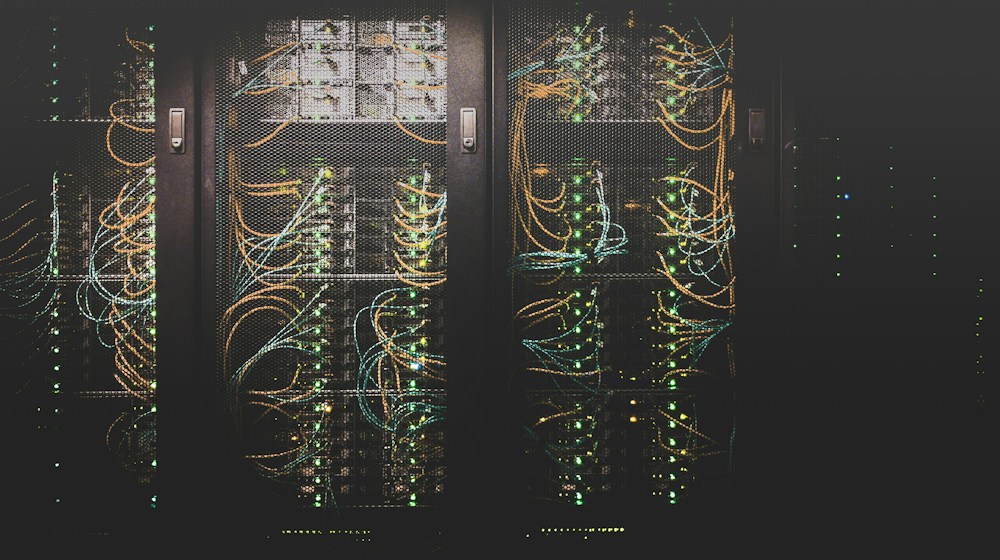 Figure 3: Global data distribution: Caching read replicas at the edge while routing writes to regional primary databases.
Stateless Compute
Modern backends are deliberately stateless. User session state is not stored in web server RAM; instead, it is packaged into cryptographically signed JSON Web Tokens (JWT) stored in secure HTTP-only cookies, or persisted in distributed Redis caching tiers. Because application containers hold no local state, the cloud orchestrator can destroy, restart, or scale worker instances across global regions instantaneously.
Polyglot Persistence
Modern architectures abandon the idea that a single database can satisfy all application requirements:
- Relational PostgreSQL: Manages structured ACID transaction data (user accounts, billing, subscriptions).
- In-Memory Redis: Handles sub-millisecond session caching, rate-limiting counters, and real-time pub/sub notifications.
- Object Storage (S3 / R2): Persists multi-terabyte uncompressed media assets, user uploads, and document PDFs.
- Vector Databases (Pinecone, pgvector): Indexes high-dimensional embeddings for AI semantic search and RAG retrieval.
5. Layer 5: The CI/CD Automation Lifecycle
In high-performing engineering organizations, software is released continuously through automated Continuous Integration / Continuous Deployment (CI/CD) pipelines:
1. Developer opens Pull Request on GitHub
   -> GitHub Actions triggers automated pipeline
   -> Runs ESLint, Prettier formatting validation
   -> Compiles TypeScript (checks for type errors)
   -> Executes Jest / Playwright unit and end-to-end tests

2. Ephemeral Preview Environments
   -> Cloudflare / Vercel automatically deploys a live preview build
   -> Unique URL generated: https://pr-42.primetechsync.pages.dev
   -> Designers and QA engineers review live changes in browser

3. Merge to Main
   -> Pull request merged into main branch
   -> Production SSG build executes in under 60 seconds
   -> Static HTML artifacts replicated to 300+ global edge locations
   -> Zero-downtime atomic deployment active worldwide
6. Observability: Monitoring Production Health
Once deployed, modern applications are monitored through the three pillars of Observability:
- Metrics: Real-time dashboards monitoring request throughput, P99 server latency, CPU utilization, and HTTP error rates (4xx/5xx).
- Logs: Structured JSON log aggregation (Elasticsearch, Coralogix, CloudWatch) allowing engineers to query trace IDs across distributed microservices.
- Traces & Error Tracking: Distributed tracing (OpenTelemetry) and automated client-side error reporting (Sentry) that instantly alerts on-call engineers when an unhandled JavaScript exception affects end users.
Conclusion: The Era of Composable Engineering
Modern web applications are no longer built by crafting every operational wheel from scratch. Today’s elite engineering teams are composable architects: combining static pre-rendering with modern Astro layouts, utilizing global edge networks like Cloudflare, consuming specialized backend APIs for payments and search, and automating everything through Git-driven CI/CD. The result is a generation of web applications that are faster, more secure, infinitely scalable, and more delightful to use than anything previously imagined in computing history.
Edge Computing, Edge Middleware, and Global Content Delivery
Building modern web applications requires optimizing performance for users distributed globally across every continent and device type. While centralized cloud data centers remain essential for deep database transactions, application delivery networks have fundamentally transformed where web application logic executes.
The Power of Edge Middleware and Global Routing
Edge networks (powered by Cloudflare Workers, Fastly Compute, or Vercel Edge Runtime) place serverless compute nodes within milliseconds of 95% of the world’s internet-connected population.
Edge middleware executes before an incoming request ever reaches origin servers, unlocking transformative capabilities:
- Geolocation Personalization: Automatically detecting user region, currency, and language preferences and rewriting HTML headers or redirecting traffic without origin server round-trips.
- A/B Testing and Feature Experimentation: Splitting user traffic cryptographically at the edge, eliminating the notorious layout shift and flickering caused by client-side JavaScript testing scripts.
- Bot Mitigation and Perimeter WAF: Filtering malicious scrapers, DDoS attacks, and credential-stuffing bots at the network edge before they consume expensive backend database connections.
+--------------------------------------------------------------+
|             Modern Edge Application Request Flow             |
+--------------------------------------------------------------+
| End User Device                                              |
|      |                                                       |
|      v                                                       |
| [Global Anycast Edge Network (<10ms)]                        |
| - WAF & DDoS Shield                                          |
| - Edge Middleware (Auth check, Geo routing, A/B Flag)        |
| - Edge Cache (Static Assets, Pre-rendered HTML Pages)        |
|      |                                                       |
|      +-- [Cache Hit] ---> Returns Instant Edge Response      |
|      |                                                       |
|      +-- [Cache Miss] --> Encrypted Tunnel (Argo Routing)    |
|                                |                             |
|                                v                             |
|                     [Centralized Backend Core]               |
|                     - App Server (Node/Go/Rust)              |
|                     - Distributed DB Cluster (Postgres)      |
+--------------------------------------------------------------+
Static Site Generation (SSG) Combined with Edge Revalidation
The gold standard for content-driven digital magazines and e-commerce platforms is Static Site Generation paired with edge CDN distribution. By pre-rendering thousands of pages into static HTML during build time, applications achieve sub-50ms Time to First Byte (TTFB), zero database load under viral traffic spikes, and unbreachable security because there is no dynamic web application server to exploit with SQL injection or remote code execution attacks.
Continuous Integration and Automated Previews in Modern Web Engineering
High-performing web development teams deploy code to production dozens of times per day with zero downtime. This agility is driven by automated preview environments generated per Pull Request (PR). Every branch triggers automated linting, unit testing, end-to-end Playwright browser simulations, and generates an ephemeral preview URL. Product managers, visual designers, and QA engineers inspect live changes on realistic staging infrastructure prior to merging into production, permanently eliminating unexpected visual regressions.


What Is API and How Does It Work?
A comprehensive guide explaining Application Programming Interfaces (APIs), REST vs GraphQL vs gRPC, JSON payloads, HTTP status codes, and API security.

Frontend vs Backend Development: Understanding the Difference
A comprehensive architectural comparison between client-side frontend engineering and server-side backend systems, exploring tech stacks, responsibilities, and career paths.
What Is Git and GitHub? A Complete Beginner's Guide
A definitive guide to version control with Git and collaborative development on GitHub, exploring commit DAGs, branching models, pull requests, and merge strategies.